Lately, more and more buyers around the world are paying attention to fireproof vermiculite. That’s because industries like construction, steel, agriculture, and insulation are all on the lookout for lighter mineral options. According to Grand View Research, the global vermiculite market keeps growing—mainly driven by its use in thermal insulation and fire-resistant products. MarketsandMarkets also points out that construction and industrial insulation will continue to be key demand areas going forward. Sounds promising, right? But here’s the thing, picking the right product isn’t as straightforward as it seems.
The U.S. Geological Survey’s Mineral Commodity Summaries 2024 confirms that vermiculite is still an important mineral for industry. Its expanded structure gives it a low weight, good thermal stability, and decent sound absorption. Robert L. Virta, a former mineral specialist at the USGS, once described vermiculite as a mineral prized for its "lightweight, insulation properties, and fire resistance." That still holds true today when making purchasing decisions. That said, if you see something labeled as “fireproof,” don’t automatically assume it’s guaranteed to perform perfectly.
Actual performance really depends on all sorts of factors—like the quality of the ore, the temperature used to exfoliate it, particle size, moisture content, the chemistry of the binder, and how it’s installed. A loosely packed, golden-brown granule may behave quite differently compared to a molded panel or a sprayed coating. So, buyers, it’s worth asking for detailed tech data sheets, safety info, batch test results, and independent fire test reports. Tests like ASTM E84, ASTM E136, or EN 13501-1 might be relevant, depending on exactly what you need. Bottom line: certifications and proper testing really do matter.
This guide takes a look at some of the top fireproof vermiculite options out there—focusing on things like thermal performance, purity, packaging, consistent supply, and environmentally responsible sourcing. Of course, it’s not always perfect because different suppliers report their test results under different conditions—that’s something to watch out for. The lowest price isn’t always the best deal either; it might hide higher moisture levels, inconsistent expansion, or shipping costs that add up. A wise buyer will dig into the details before placing an order and making sure everything’s crystal clear.
Vermiculite is a naturally occurring, hydrated magnesium-aluminum silicate. The USGS Mineral Commodity Summaries 2024 identifies it as a lightweight mineral used in insulation and high-temperature applications. When heated, its trapped water turns into vapor. The layered particles then separate and expand, creating many tiny air spaces. That structure slows heat transfer without burning like organic materials.
The expansion process is the key. Expanded vermiculite commonly reaches thermal conductivity near 0.06–0.10 W/m·K at room temperature, according to independent technical data sheets and laboratory reports. Performance changes with density, moisture, binder type, and board thickness. ISO 1182 testing also reminds buyers that non-combustibility depends on the complete product, not the mineral alone. Small details matter.
Fireproof Vermiculite Boards can therefore shield furnace linings, kiln doors, pipes, and building service areas. A board may remain dimensionally stable while the exposed surface becomes very hot. It should still be installed with suitable joints and mechanical support. I would not treat “fireproof” as an unlimited promise. Actual fire ratings require project-specific testing, such as temperature cycling and flame exposure. One weakness remains: cutting can create dust, and careless handling may reduce board integrity. Professional buyers should request test temperatures, density, moisture limits, and full laboratory reports before comparing suppliers.
2026 Best Fireproof Vermiculite for Global Buyers
Vermiculite is a layered magnesium-aluminium silicate that expands into light, heat-resistant particles. Its fire performance depends on grade, density, moisture, and binder composition. Fine grades fill narrow spaces, while medium and coarse grades provide better insulation thickness. The U.S. Geological Survey’s Mineral Commodity Summaries 2025 reports global vermiculite mine production in the hundreds of thousands of metric tons annually. This supply scale supports industrial use, but quality still varies by source.
For a Vermiculite Fireproof Board, expanded particle size affects strength and thermal movement. Lower-density boards reduce weight, yet they may feel fragile around screw holes. Higher-density grades usually improve handling and surface hardness. ASTM C516 provides a reference for loose-fill expanded vermiculite insulation, while fire-rated boards should be tested under the required regional standard. Do not treat “non-combustible” as unlimited fire protection. The binder can soften, crack, or release smoke before the mineral structure fails.
Tips: Ask for particle-size distribution, bulk density, moisture content, and test reports. Check fire exposure time, not only the temperature claim. A 1,000°C label sounds impressive, but it may not represent a complete board assembly. Inspect one cut edge before large orders. In practice, small gaps often reduce performance more than minor grade differences. I would also request repeat testing, because one laboratory result can hide production variation.
Key Properties and Grades of Vermiculite for High-Temperature Use
| Expanded Grade | Typical Particle Size | Typical Bulk Density | Typical Service Temperature | Typical Thermal Conductivity |
|---|---|---|---|---|
| Micron / superfine | Below 0.5 mm | 120–180 kg/m³ | Up to approximately 1,000°C | 0.06 W/m·K |
| Fine | 0.5–1 mm | 100–160 kg/m³ | Up to approximately 1,000°C | 0.07 W/m·K |
| Medium | 1–3 mm | 90–140 kg/m³ | Up to approximately 1,000°C | 0.09 W/m·K |
| Coarse | 3–6 mm | 80–120 kg/m³ | Up to approximately 1,000°C | 0.11 W/m·K |
| Extra coarse | 6–10 mm | 70–110 kg/m³ | Up to approximately 1,000°C | 0.13 W/m·K |
Expanded vermiculite is a lightweight, non-combustible mineral used for high-temperature insulation, refractory mixes, furnace linings, firestop compounds, and thermal protection. Finer grades generally provide smoother filling and better packing, while coarser grades offer greater void volume and lower bulk density. The chart shows representative thermal-conductivity values at approximately 25°C; actual performance varies with grade, moisture, compaction, temperature, and processing conditions.
For global buyers, choosing fireproof vermiculite starts with the application, not the lowest quote. Loose-fill insulation needs lightweight, evenly expanded particles that settle slowly. Refractory boards and coatings may require finer grades for smooth mixing and better contact. A furnace lining faces different demands from a passive wall system. Check service temperature, bulk density, particle size, moisture, and chemical purity. Vermiculite can resist heat well, but it is not a universal fire barrier. Temperature alone misleads. The full assembly still needs tested design data.
Ask suppliers for a current technical data sheet and a representative sample. Compare thermal conductivity at the temperatures your project will actually face. Confirm whether the material is raw or expanded, because those products behave differently. For steel protection, adhesion and coating thickness matter as much as mineral performance. For insulation fill, low density may help, but excessive dust can complicate installation. I have found that buyers sometimes trust a single laboratory number too quickly. That is a weakness worth correcting.
Tips: Request batch details, sieve analysis, moisture results, and fire-test reports. Check packaging before shipping; damp vermiculite may arrive compacted. Discuss local building requirements with a qualified engineer. Test small panels. This may reveal mixing, settling, or cracking problems that a brochure will not show. Keep records of batch numbers and site conditions. These records make later quality checks more reliable.
Global buyers need more than a high fire rating when selecting Vermiculite Fireproof Insulation Board. Quality begins with consistent mineral grading, controlled density, and clean processing. A reliable supplier should provide batch records, safety data, and traceable test reports. These documents make comparison easier across different markets.
Standards vary by destination. Buyers may need evidence aligned by ISO, EN, ASTM, or local building requirements. Test results should cover fire reaction, thermal conductivity, moisture resistance, compressive strength, and dimensional stability. Ask whether testing used the final board thickness and installation method. Small differences can change performance. They matter.
Safety also requires careful material verification. Request declarations for asbestos, heavy metals, and other restricted substances where local regulations require them. During inspection, check for cracked edges, uneven surfaces, and excessive dust. A board may look strong but fail after repeated heating cycles. We have seen this happen. Packaging deserves attention too. Damp storage can damage insulation before installation.
Performance depends on real conditions, not only laboratory figures. Confirm the service temperature, fixing method, joint treatment, and expected fire exposure. One weakness remains: international documents are not always directly comparable. Buyers should review test scope, laboratory competence, and certificate validity instead of trusting a single impressive number. A practical sample trial can reveal cutting loss, fit, and surface stability before large-scale purchasing.
Expanded vermiculite supports fire-resistant construction through its low density, porous structure, and mineral stability. It is commonly used in lightweight fireproof concrete, wall plasters, ceiling panels, and insulation boards. In steel protection, mixed vermiculite coatings can slow heat transfer around beams and columns. The material is also useful around chimneys, furnaces, kilns, and high-temperature pipe systems. It remains stable under intense heat.
However, it is not a complete fire barrier by itself. Performance depends on thickness, binder selection, moisture, and installation quality.
In project assessments, particle size often affects pumping, mixing, and surface finish. Coarse grades provide more insulation. Fine grades usually create smoother coatings.
Engineers should review density, thermal conductivity, fire-test reports, and contamination controls before purchase. Local standards also differ between regions, so test evidence must match the intended application. That detail is sometimes overlooked.
A practical buyer should request samples and check them under real mixing conditions. Vermiculite can absorb moisture during storage, which may change handling and final strength. Covered, dry storage is essential.
I have seen promising specifications fail because workers used excessive water or uneven application.
The mineral deserves careful design, not blind confidence. Safety data and traceability should remain available throughout the supply chain.
2026 Best Fireproof Vermiculite for Global Buyers
How Global Buyers Can Evaluate Suppliers, Pricing, and Delivery
Global buyers should judge fireproof vermiculite by tested performance, not catalog language. Vermiculite is mineral-based and generally non-combustible, but binders can change the final result. Ask for particle-size distribution, bulk density, moisture, and thermal conductivity data. ASTM C516 can support insulation-grade evaluation, while project specifications may require EN 13501-1 or another recognized fire classification. “Fireproof” alone is too vague.
Check supplier evidence carefully. Request recent third-party laboratory reports, batch numbers, mine origin, and a retained sample. For Incubate Vermiculite( Hatching Vermiculite ), confirm sterility controls, particle uniformity, and packaging strength before placing a large order. The USGS Mineral Commodity Summaries 2025 identifies vermiculite as a globally traded industrial mineral, with production concentrated among several mining regions. This concentration can affect lead times and negotiation power. I would not rely on one quotation.
Pricing needs more than a per-ton figure. Compare moisture-adjusted weight, screening losses, export packing, inland transport, insurance, and port charges. UNCTAD’s Review of Maritime Transport 2024 reported continuing volatility in shipping routes and freight conditions. Delivery promises can therefore look precise but remain fragile. Use staged purchasing, inspection before loading, and a written tolerance for delays. That costs more initially. It can prevent expensive production interruptions.
Buyer evaluation table for expanded vermiculite used in refractory insulation, furnace linings, fire-resistant boards, and high-temperature fillers
| Evaluation Dimension | Fine Grade | Medium Grade | Coarse Grade | Premium Refractory Grade | What Global Buyers Should Verify |
|---|---|---|---|---|---|
| Typical particle size | 0.3–1.0 mm | 1.0–3.0 mm | 3.0–6.0 mm | 1.0–4.0 mm, screened to project specification | Request a sieve-analysis report and confirm the permitted oversize and undersize fraction. |
| Typical bulk density | 80–130 kg/m³ | 70–110 kg/m³ | 60–95 kg/m³ | 70–120 kg/m³, batch controlled | Lower density generally improves insulation, but excessive fines can increase dust and handling losses. |
| Typical thermal conductivity | 0.065–0.095 W/m·K | 0.060–0.090 W/m·K | 0.060–0.085 W/m·K | ≤0.080 W/m·K at the supplier’s stated test temperature | Compare results only when test temperature, moisture condition, density, and test method are the same. |
| High-temperature performance | Suitable for insulation mixes and fine fillers | Suitable for refractory concrete and insulating castables | Suitable for loose-fill insulation and lightweight refractory mixes | Recommended service range commonly stated as approximately 900–1,100°C, depending on formulation | Ask for the maximum recommended service temperature for the finished application, not only the mineral’s melting or softening point. |
| Moisture content at shipment | ≤2.0% | ≤2.0% | ≤2.0% | ≤1.5%, with sealed moisture-resistant packaging | Moisture affects weight, flowability, storage life, and thermal performance. Confirm the test basis. |
| pH of water extract | Approximately 7–9 | Approximately 7–9 | Approximately 7–9 | Supplier-controlled range stated on the technical data sheet | Verify compatibility with cement, binders, coatings, and other refractory ingredients. |
| Color and appearance | Light silver, tan, or brown flakes | Light silver, tan, or brown granules | Light silver, tan, or brown expanded flakes | Uniform color and low visible contamination | Color alone does not prove fire performance; inspect contamination, unexpanded ore, dust, and foreign particles. |
| Indicative export price | US$180–320 per metric ton | US$160–290 per metric ton | US$150–280 per metric ton | US$240–420 per metric ton | Indicative bulk export ranges only; confirm whether the quotation is EXW, FOB, CFR, or CIF and whether packaging is included. |
| Common packaging | 20–25 kg kraft bags or woven bags | 20–25 kg bags; 500–1,000 kg jumbo bags | 20–25 kg bags; jumbo bags for industrial orders | Moisture-resistant 20–25 kg bags or lined jumbo bags | Confirm net weight tolerance, inner liner, palletization, container loading plan, and dust-control measures. |
| Typical 20-foot container loading | Approximately 8–14 metric tons | Approximately 9–16 metric tons | Approximately 10–18 metric tons | Approximately 8–14 metric tons | Actual quantity depends on bulk density, packaging, pallet use, port restrictions, and maximum container payload. |
| Typical production lead time | 7–15 calendar days | 7–15 calendar days | 10–20 calendar days | 15–30 calendar days for controlled grading or customized packaging | Obtain a written production schedule and clarify whether lead time starts after payment, artwork approval, or sample approval. |
| Typical international transit planning | 25–50 days door-to-port or port-to-port, depending on route | 25–50 days door-to-port or port-to-port, depending on route | 25–50 days door-to-port or port-to-port, depending on route | 25–60 days, including inspection and document preparation | Separate production time, inland transport, port handling, ocean transit, customs clearance, and final delivery. |
| Minimum order quantity | Commonly 1–5 metric tons | Commonly 1–5 metric tons | Commonly 1–5 metric tons | Commonly 5–20 metric tons | Smaller orders may carry higher packaging, sampling, and freight costs per ton. |
| Quality documents to request | Current certificate of analysis, particle-size distribution, bulk density, moisture content, thermal-conductivity data, safety data sheet, packing list, certificate of origin, and pre-shipment inspection records where required. | Check that documents identify the same lot number, production date, quantity, and packaging shown on the shipment. | |||
| Recommended application | Fine refractory fillers, boards, coatings, and molded insulation products | Insulating castables, refractory mixes, and thermal insulation compounds | Loose-fill insulation, lightweight mixes, and furnace back-up insulation | Projects requiring tighter grading, lower variability, and documented thermal performance | Choose the grade according to the finished product recipe and installation method rather than price per ton alone. |
| Overall buyer suitability | Best for fine, uniform formulations | Best all-purpose industrial grade | Best for lightweight loose-fill applications | Best for controlled, specification-driven projects | Approve the supplier only after comparing a representative sample with the signed technical specification. |

Purchasing note: Price, lead time, loading quantity, and transit estimates are indicative planning ranges for 2026 international procurement. Final terms depend on grade, order volume, origin, destination, packaging, Incoterms, freight conditions, customs requirements, and laboratory verification.
2026 Best Fireproof Vermiculite for Global Buyers
Selecting fireproof vermiculite requires more than comparing price per ton. Global buyers should review particle size, expansion ratio, moisture content, and thermal stability. These properties affect insulation performance, mixing accuracy, and installation results. Ask for recent test reports, technical data, and a clear batch identification system. Small details matter.
Storage conditions strongly influence long-term quality. Keep vermiculite in sealed, moisture-resistant packaging on raised pallets. Avoid direct contact with concrete floors, leaking roofs, and chemical storage areas. A clean, dry warehouse is essential. It is not always enough.
During handling, use gentle transfer methods to reduce crushing and dust generation. Workers should follow suitable respiratory and eye protection procedures. Do not pour bags from excessive heights. This can damage the particle structure and create unnecessary airborne dust. Inspect packaging before unloading, especially after long-distance shipping. Torn bags may hide moisture absorption or contamination.
For long-term performance, use older batches first and record opening dates. Check stored material for clumping, unusual odors, or visible foreign matter. Vermiculite may remain usable for years when protected, but poor storage can reduce its expected insulation value. Some buyers focus heavily on laboratory figures and overlook warehouse reality. That is a mistake worth reconsidering. Trial mixing with the intended binder or refractory system can expose compatibility issues before full-scale use. A small test saves trouble.
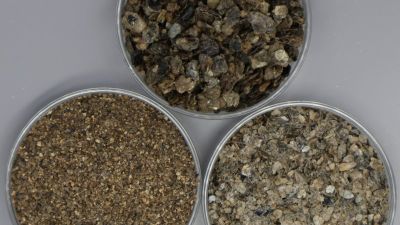
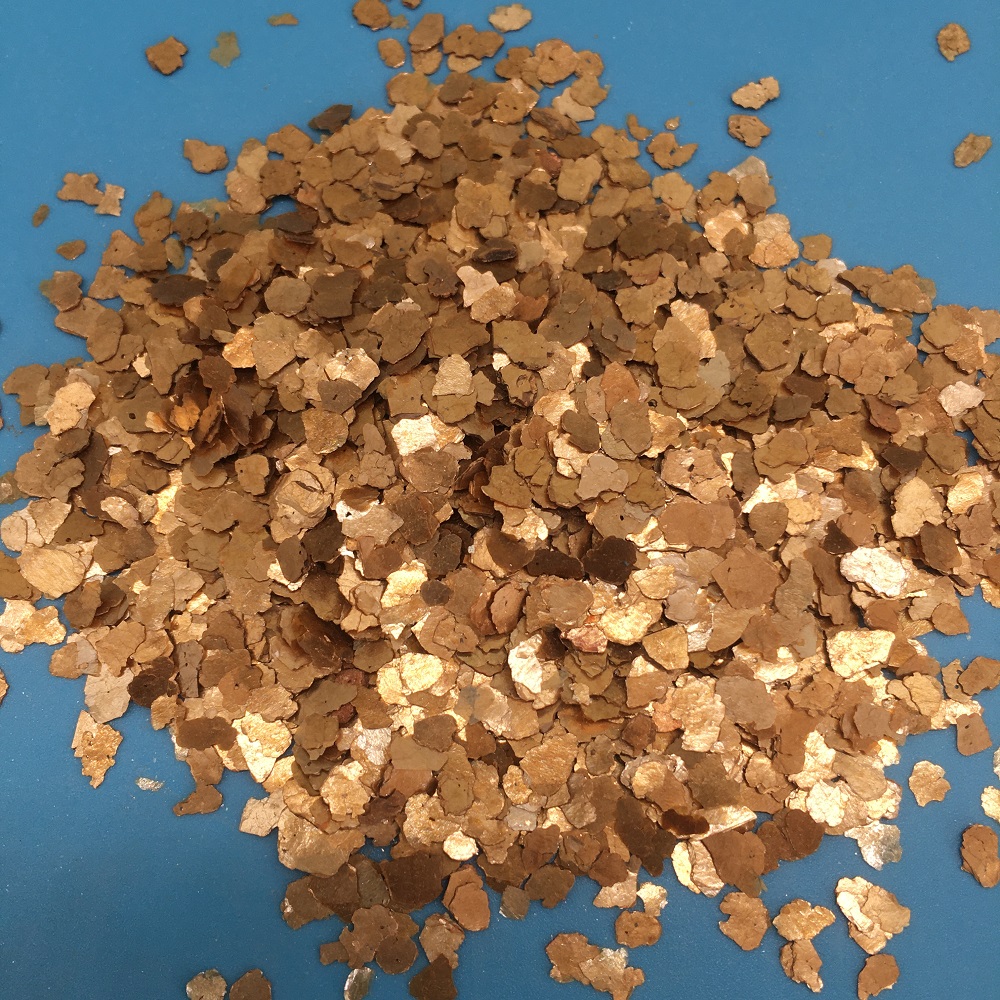
Vermiculite flakes, also called unexpanded vermiculite or raw vermiculite concentrate, are natural hydrated magnesium-aluminum silicate particles with a mica-like layered structure. Their typical colors range from golden brown and bronze to yellowish or dark brown. According to the U.S. Geological Survey’s *Mineral Commodity Summaries*, vermiculite is primarily valued for its exfoliation behavior and is used in horticulture, construction, insulation, refractories, and fire-resistant products. When rapidly heated, structural water turns into vapor, separating the layers and producing a lightweight, porous aggregate.
Before expansion, the material normally has a much higher bulk density and lower volume than expanded vermiculite, making it more economical to transport over long distances. Published industry specifications commonly report expansion ratios of approximately 8–12 times, although the actual result depends on ore grade, flake size, moisture content, and furnace conditions. Expanded products may achieve bulk densities roughly between 60 and 180 kg/m³, while unexpanded feedstock is substantially denser. These differences are important for plants controlling their own expansion process and final product performance.
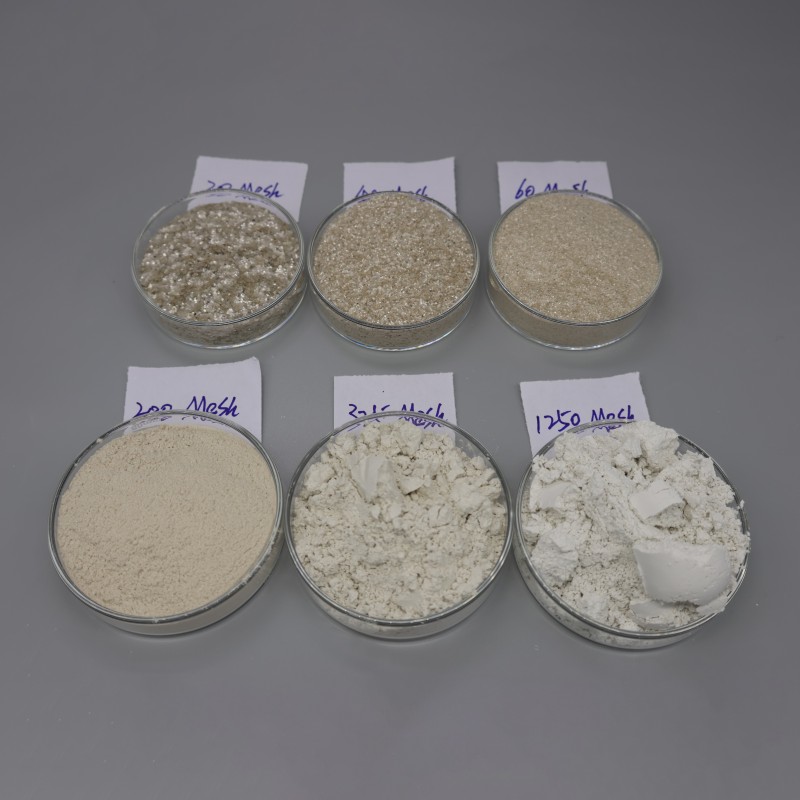
When buying vermiculite flakes, purchasers should evaluate particle-size distribution, expansion ratio, cleanliness, moisture, packaging strength, and consistency between batches. Fine grades may suit horticultural and absorbent applications, while larger flakes are often preferred for insulation aggregates, refractory products, fireproof boards, and lightweight construction materials. Reliable testing records and stable export packaging help manufacturers maintain predictable processing efficiency and finished-product quality.
: It expands into lightweight, heat-resistant particles with a layered mineral structure. Its performance depends on grade, density, moisture, and binder composition.
Fine particles fill narrow gaps and small cavities. Medium and coarse particles usually provide thicker insulation. The best choice depends on the assembly.
Not always. Higher density can improve handling and surface hardness. Lower density reduces weight but may feel fragile near screw holes.
No. A temperature label may describe only the mineral material. The binder can soften, crack, or release smoke earlier. Review the complete assembly test.
Request particle-size distribution, bulk density, moisture content, expansion ratio, and recent test reports. Ask about exposure time, not temperature alone. One laboratory result may hide production variation.
Keep bags sealed on raised pallets in a clean, dry warehouse. Avoid concrete floors, leaking roofs, and chemical storage areas. Moisture matters greatly.
Use gentle transfer methods and avoid pouring bags from excessive heights. Inspect torn packaging before unloading. Wear suitable respiratory and eye protection.
Check for clumps, unusual odors, foreign matter, and moisture damage. Use older batches first and record opening dates. A small trial mix can reveal binder compatibility problems. Small tests save trouble.
Fireproof Vermiculite is a lightweight, naturally heat-resistant mineral valued for its low thermal conductivity, non-combustible behavior, and ability to maintain insulation under high temperatures. This article explains how its layered structure supports heat resistance and compares important grades, particle sizes, purity levels, and moisture conditions for different fireproofing requirements. It also shows how to select suitable material for construction boards, insulation fills, furnace linings, packaging protection, and other industrial applications.
For global buyers, the guide highlights the importance of checking quality consistency, safety documentation, testing methods, and conformity with applicable international standards. It also discusses how to evaluate suppliers through technical data, production capacity, packaging, pricing transparency, lead times, and delivery reliability. Proper storage and careful handling are essential to prevent contamination, moisture absorption, and performance loss, helping Fireproof Vermiculite remain effective throughout its intended service life.