Picking out the best Calcined Mica Powder from China isn’t just about comparing prices or eyeballing some bright white samples. There’s actually a lot more to it. When you calcine mica, it changes things like moisture content, surface activity, and how it handles heat — all those little differences that matter when you're working with coatings, plastics, rubber, welding materials, or electrical insulation.
According to the U.S. Geological Survey’s Mineral Commodity Summaries 2024, mica isn’t just some niche mineral. It’s used pretty widely in construction, plastics, paints, and all kinds of technical products. The report also highlights that the quality of the mica supply really depends on how it’s processed and the regional production standards. Market research from companies like Grand View Research and IMARC Group shows that there’s still strong demand for mica fillers — especially in coatings, polymers, and high-tech manufacturing. But here’s the thing: those reports mostly talk about mica in general terms. They don’t really dig into how Chinese calcined grades compare or rank against each other.
And that’s a pretty important point.
Dr. S. K. Haldar, a well-respected expert in mineral exploration and processing, emphasizes that when it comes to mineral quality, you can’t just judge by looks. You need to look at actual, measurable properties. This idea guides how we compare different suppliers. A trustworthy one should give you detailed info like particle size, loss on ignition, moisture levels, whiteness, iron content, pH, and thermal stability. Getting these tested by an independent lab? Even better. While ISO 9001 certification is helpful, it doesn’t really replace thorough product testing.
Let’s be honest — no supplier is perfect. Some datasheets might look impressive but leave out details about batch-to-batch variation. Others might offer rock-bottom prices but support is pretty weak. So, when choosing the best calcined mica powder from China, look for stuff like stable chemical makeup, controlled particle sizes, transparent production processes, consistent packaging, and performance tailored to your specific needs. Our main focus is on these real-world, practical details. And here’s a truth that’s a bit uncomfortable but important: lab test results alone can’t fully predict how a batch will perform on the factory floor.
In the end, it’s all about balancing the data with real-world experience.
What Is the Best Calcined Mica Powder from China?
What Is Calcined Mica Powder and How Is It Made?
Calcined Mica is produced by heating natural mica flakes in a controlled furnace. The process removes moisture, organic residue, and part of the crystal-bound hydroxyl groups. It also changes the mica’s surface and thermal behavior. The powder does not simply become “better” through higher temperatures. Excessive heat can damage its layered structure and reduce performance.
Manufacturers usually dry, crush, classify, and screen the raw mica before calcination. Temperature control matters at every stage. A stable furnace helps produce consistent whiteness, particle size, and loss on ignition. After heating, the material is cooled in a clean environment and milled to the required fineness. Fine powder feels smooth between the fingers. Coarser grades show visible platelets under a simple magnifying lens.
The best Calcined Mica from China depends on the application. Coatings may require high brightness and low moisture. Insulation products may prioritize thermal stability and dielectric performance. Quality checks should include chemical composition, particle-size distribution, whiteness, moisture, and residue on the sieve. Ask for recent test data, not only a general specification sheet. In practical evaluation, small differences in furnace control can affect color and oil absorption. This point is easy to overlook. A sample may perform well in the laboratory but behave differently after storage, mixing, or transport. Testing the powder in the final formulation remains essential.
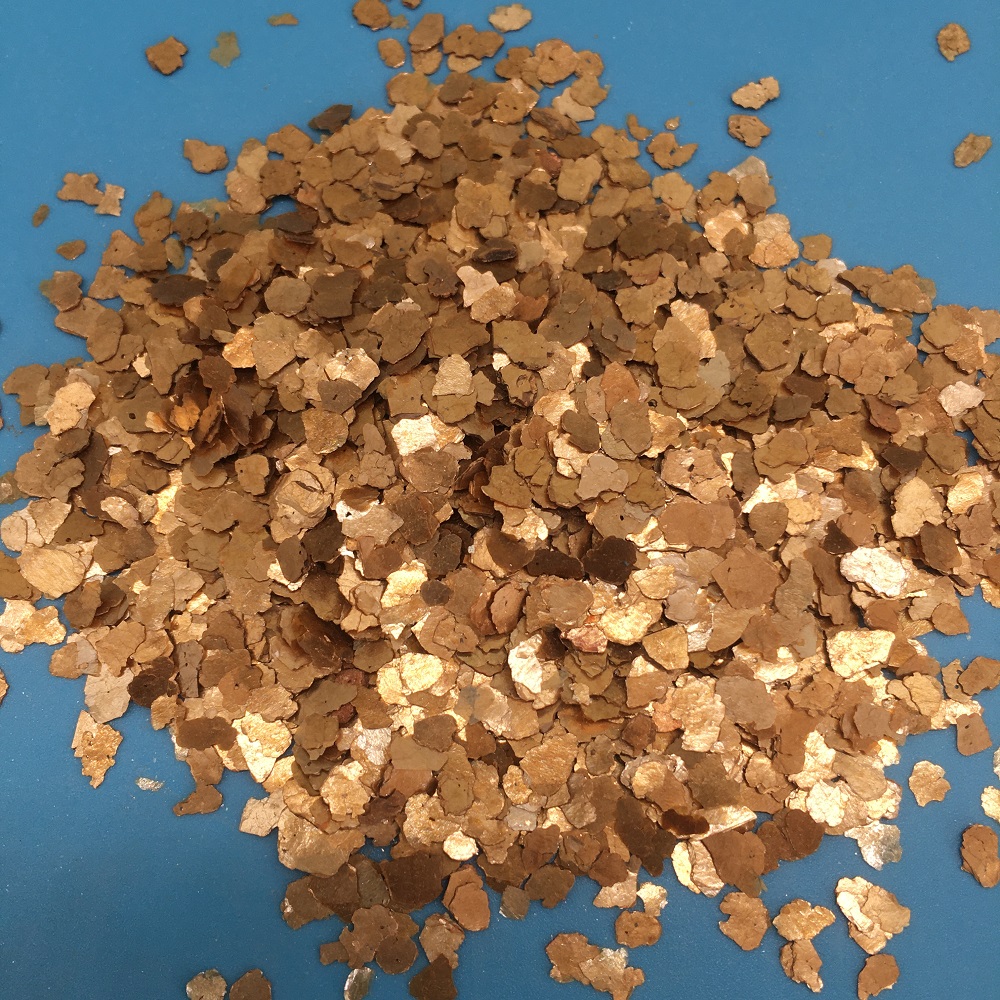
Muscovite and phlogopite are the main mica minerals used for calcined powder. Muscovite usually offers a light color, smooth plate structure, and good electrical insulation. Phlogopite contains more magnesium and often performs better under elevated temperatures. Its brown or golden tone may influence the final coating appearance.
Calcination removes structural water and reduces moisture-related instability. However, heat treatment does not make every mica suitable for every application. Processing temperature matters. Excessive heat can damage the layered structure and reduce reinforcement.
In Mica Powder In Powder Coating, particle size, aspect ratio, whiteness, and oil absorption affect dispersion and surface quality. A practical check includes moisture testing, sieve analysis, and a small laboratory coating trial.
Calcined sericite may also be selected when a finer texture and controlled brightness are needed. Its performance depends strongly on mineral purity and grinding conditions.
In my experience, two powders with similar chemical data can behave differently in a spray booth. That difference is easy to overlook. X-ray diffraction, loss-on-ignition testing, and side-by-side application tests provide more reliable evidence than appearance alone. I would not choose a mineral only because it looks bright. The resin system, curing temperature, and required finish must guide the selection. Mistakes still happen when suppliers provide incomplete particle-size data. Asking for batch records and representative samples is a sensible safeguard.
High-quality calcined mica powder begins with consistent mineral purity, not a bright sample alone. In practical coating trials, I check color, particle shape, moisture, and dispersion together. A clean white or pale tone supports stable color in paints, plastics, and dry mixes. However, brightness without low contamination can be misleading.
Calcination should reduce residual moisture and improve thermal stability without damaging the mica structure. A reliable grade shows low loss on ignition and remains free-flowing during storage. Its particle-size distribution matters. Fine particles can improve surface coverage, while oversized flakes may create roughness or settling. The best balance depends on the application. For electrical insulation, stable dielectric performance and low conductivity are important. For coatings, controlled oil absorption, easy wetting, and predictable viscosity often matter more.
I also examine the aspect ratio under a microscope. Well-formed flakes can strengthen barriers, but excessive breakage reduces performance. Testing should include moisture, whiteness, particle size, pH, oil absorption, and thermal behavior. For Chinese supply, request batch records and representative samples before making a larger purchase. A polished laboratory sample is not enough. I have seen small changes in calcination create visible differences in dispersion. That lesson still matters. Trackability matters too.
High-quality calcined mica powder is typically evaluated by whiteness, particle-size consistency, moisture, and loss on ignition. The chart shows representative technical benchmark values commonly used for specification control. Higher values are preferred for whiteness and fine-particle yield, while lower values are preferred for moisture and loss on ignition.
| Quality Property | Representative Benchmark | Quality Significance |
|---|---|---|
| Whiteness | ≥ 85% | Improves brightness and color stability in coatings, plastics, and rubber. |
| 325-mesh passing rate | ≥ 99.5% | Indicates consistent fine particle size and better dispersion. |
| Moisture | ≤ 0.5% | Reduces clumping, processing problems, and storage instability. |
| Loss on ignition | ≤ 1.0% | Helps confirm effective calcination and low residual volatile content. |
What Is the Best Calcined Mica Powder from China?
The best calcined mica powder is not judged by whiteness alone. Its grade depends on particle size, thermal treatment, chemistry, and application performance. The USGS Mineral Commodity Summaries 2025 separates sheet mica from scrap and flake mica. This classification matters. A powder made from different feedstock may show similar color but behave differently in coatings or plastics.
Testing should begin with sampling from several bags, not one convenient scoop. Particle-size distribution can be measured under ISO 13320:2020, using laser diffraction. Record D10, D50, and D90 values. A practical laboratory report should also list moisture, loss on ignition, pH, oil absorption, and whiteness. ASTM E1131 thermogravimetric analysis can help verify volatile content and thermal residue. X-ray diffraction may confirm mica structure after calcination.
Look closely at the report.
A reliable supplier should provide batch numbers, furnace temperature records, and repeat-test results. Heavy-metal screening and trace-element analysis are also sensible for products entering regulated industrial applications. Some buyers accept a D50 near 10–20 micrometres, while others need much finer powder; there is no universal “best” grade. Over-calcination can reduce desirable lamellar behavior, although this point is often overlooked. I would also question unusually high whiteness claims without a test method, reference standard, and sample image. A clean result is useful, but a transparent limitation is better.
What Is the Best Calcined Mica Powder from China?
Which Industries Use Calcined Mica Powder?
Calcined mica powder serves industries that need heat resistance, insulation, and stable mineral performance. Its structure changes during controlled heating. This can improve moisture resistance and reduce volatile content.
Paint and coating manufacturers use it as a functional extender. It can support barrier properties, surface durability, and controlled texture. Plastic processors add it to selected compounds for dimensional stability and thermal performance. Rubber producers may use it in seals, gaskets, and molded parts. Electrical insulation is another important field. Fine mica particles can help strengthen insulating layers when formulation and processing are carefully controlled.
Construction materials also use calcined mica powder. It may improve workability in joint compounds, coatings, and specialty cement products. In welding materials, the mineral can support arc stability and slag formation. Results depend on particle size, calcination temperature, purity, and moisture control. “Best” is not universal.
Tips: Ask for a recent test report. Check whiteness, residue, particle distribution, and loss on ignition. Request samples before placing a large order. Compare performance in your actual formula, not only in a supplier brochure. Mica Powder Vs Pigment Powder is an important distinction; mica mainly provides mineral function, while pigments primarily provide color. I have seen formulas fail when these roles were treated as interchangeable. That mistake deserves review. Consistent production records matter, too.
The most suitable calcined mica powder is selected according to mineral type, calcination level, particle size, chemical purity, thermal stability, and the requirements of the end-use industry. The values below are typical technical ranges and should be confirmed through a product specification sheet and application testing.
| Industry | Main Application | Why Calcined Mica Is Used | Important Selection Criteria | Typical Particle-Size Range | Typical Performance Requirements |
|---|---|---|---|---|---|
| Paints and Coatings | Anti-corrosion coatings, industrial primers, textured coatings, and heat-resistant coatings. | Improves barrier properties, dimensional stability, crack resistance, and resistance to heat and weathering. | Low moisture, good whiteness or controlled color, low soluble salts, plate-like particle structure, and stable dispersion. | Approximately 200 to 1,250 mesh, depending on coating thickness and surface finish. | Good chemical resistance, low oil absorption, controlled viscosity, and compatibility with the selected resin system. |
| Plastics and Polymer Compounds | Reinforcement and functional filler for thermoplastics, thermosetting plastics, and engineering polymer compounds. | Enhances stiffness, dimensional stability, heat resistance, electrical insulation, and resistance to shrinkage. | Moisture content, aspect ratio, particle-size distribution, surface treatment, and compatibility with the polymer matrix. | Approximately 200 to 800 mesh for general compounding; finer grades may be used for injection molding. | Low volatile content, uniform dispersion, low iron contamination, and minimal effect on melt flow. |
| Rubber Products | Rubber sheets, seals, gaskets, cable compounds, friction materials, and molded rubber components. | Supports reinforcement, improves dimensional stability, reduces shrinkage, and contributes to heat and electrical resistance. | Low moisture, controlled particle size, low abrasion, good dispersion, and compatibility with rubber additives. | Approximately 200 to 600 mesh for common rubber formulations. | Stable processing behavior, low impurity level, and good resistance to thermal aging. |
| Electrical and Electronics | Electrical insulation compounds, insulating boards, cable materials, and high-temperature insulating components. | Provides electrical insulation, thermal stability, low dielectric loss, and resistance to arc and heat in suitable formulations. | High chemical purity, low iron content, low moisture, controlled dielectric properties, and consistent calcination. | Approximately 325 to 1,250 mesh, subject to the molding or coating process. | High insulation resistance, low ionic contamination, low water absorption, and stable performance at elevated temperature. |
| Welding Electrodes | Mineral component in electrode coatings and selected welding consumable formulations. | Contributes to arc stability, slag formation, coating integrity, and high-temperature performance. | Consistent chemical composition, suitable potassium or magnesium content, low moisture, and controlled particle size. | Approximately 100 to 300 mesh for coating preparation. | Reliable coating extrusion, stable arc behavior, controlled slag properties, and low volatile content. |
| Construction Materials | Fire-resistant boards, insulation panels, specialty cementitious products, joint compounds, and dry-mix formulations. | Improves heat resistance, dimensional stability, crack control, and reinforcement of mineral-based materials. | Mineral purity, moisture level, particle morphology, compatibility with binders, and resistance to thermal shock. | Approximately 100 to 600 mesh, depending on the binder and application method. | Low shrinkage, good thermal stability, consistent bulk density, and suitable water demand. |
| Friction Materials | Brake pads, brake linings, clutch facings, and other high-temperature friction composites. | Supports thermal resistance, structural stability, wear control, and reinforcement of the composite matrix. | Thermal stability, particle-size consistency, low moisture, low harmful impurities, and compatibility with resins and fibers. | Approximately 100 to 400 mesh for composite processing. | Stable friction behavior, controlled wear, low thermal expansion, and good bonding with the matrix. |
| Ceramics and Refractory Products | Specialty ceramic bodies, refractory formulations, kiln furniture, and heat-resistant mineral composites. | Contributes to thermal shock resistance, insulation, dimensional stability, and high-temperature structural performance. | Mineral type, calcination consistency, loss on ignition, chemical purity, and thermal expansion behavior. | Approximately 100 to 325 mesh, with finer grades used for dense or smooth formulations. | Low loss on ignition, controlled thermal expansion, low contamination, and stable behavior during firing. |
| Oil and Gas Drilling Fluids | Specialty lost-circulation materials and mineral additives in selected drilling-fluid systems. | Plate-like particles can help bridge or seal permeable zones and reduce fluid loss in appropriate formulations. | Particle-size distribution, bulk density, moisture, chemical stability, and compatibility with the drilling-fluid system. | Approximately 20 to 200 mesh for bridging applications, depending on the formation and treatment design. | Controlled filtration behavior, low soluble impurities, stable suspension, and predictable particle packing. |
| Cosmetics and Personal Care | Selected powder, color cosmetic, and skin-care formulations where a mineral filler or functional texture modifier is appropriate. | Can provide slip, opacity, soft texture, and a smooth feel when the material meets applicable cosmetic requirements. | Cosmetic-grade purity, heavy-metal limits, microbiological control, particle-size distribution, and regulatory documentation. | Typically 325 mesh or finer for smooth-feel formulations. | Low contamination, controlled odor, smooth skin feel, consistent color, and compliance with the applicable market regulations. |

How to identify a suitable grade: Compare the mica type, chemical analysis, moisture content, loss on ignition, particle-size distribution, whiteness, bulk density, oil absorption, thermal behavior, and available quality-control documentation. “Best” performance depends on the end-use formulation rather than on country of origin alone.
What Is the Best Calcined Mica Powder from China?
The answer depends on consistent performance, not a low quotation. Buyers should request the ore source, calcination temperature range, particle-size distribution, moisture, pH, and loss on ignition. A reliable supplier should provide recent laboratory reports for each production lot. Ask for samples from the actual factory, not only a polished catalog sample.
The USGS Mineral Commodity Summaries 2024 identifies China as an important mica-producing country and distinguishes sheet, flake, and scrap mica in market reporting. This distinction matters because feedstock strongly affects brightness and particle shape.
ISO 3262-8:2017 also provides a technical framework for mica extenders, including testing and quality evaluation. Check whether the supplier measures these properties under controlled procedures. Ask for sieve results, X-ray diffraction data, and heavy-metal screening from an independent laboratory.
During a factory audit, inspect sealed bags, dust control, furnace records, and batch labels. A dependable supplier can explain how it prevents cross-contamination between grades. It should also confirm packaging weight and storage conditions, because humid warehouses can increase powder moisture.
Compare Natural Mica Vs Synthetic Mica carefully; their chemistry, morphology, and application results may differ.
I would test dispersion in your real resin, coating, or rubber system before signing a long contract. One weakness remains: many supplier reports show averages, not worst-case results. Request at least three consecutive batch records, then investigate any unexplained variation.
Cosmetic grade talc powder is a soft, finely milled magnesium silicate valued for its silky touch, whiteness, slip, and oil-absorption performance. Its naturally lamellar structure helps reduce drag and improve spreadability, making it useful in loose and pressed powders, foundations, blushes, eye shadows, body powders, dry shampoos, and selected skincare powder blends. The U.S. Geological Survey’s *Mineral Commodity Summaries 2024* estimates global talc mine production at approximately 7 million metric tons in 2023, reflecting the mineral’s continuing importance across cosmetics and other manufacturing sectors.
When selecting cosmetic talc, formulators should evaluate particle-size distribution, whiteness, sensory feel, oil absorption, moisture content, microbiological quality where applicable, and heavy-metal control. Asbestos testing and documented raw-material traceability are particularly important for cosmetic applications. A suitable grade should also disperse consistently and maintain stable performance in both powder and cream systems without negatively affecting color or processing. Final suitability must be assessed against the regulations and safety requirements of the target market.
For manufacturers and raw-material distributors, supply consistency is as important as laboratory specifications. Stable mineral resources, controlled milling, batch-related quality documents, export-ready packaging, and sample support can help reduce variation in finished products. Before production, formulators should conduct compatibility, stability, color, and skin-feel testing at the intended use level, especially when developing pressed powders, high-coverage foundations, or products designed for sensitive-skin consumers.
: It is natural mica flakes heated in a controlled furnace. Heating removes moisture, organic residue, and some crystal-bound hydroxyl groups. The process changes the powder’s surface and thermal behavior. It does not automatically make the material better.
Raw mica is dried, crushed, classified, and screened before heating. A stable furnace helps control color, particle size, and loss on ignition. After calcination, the powder cools in a clean area. It is then milled to the required fineness.
Not always. Excessive heat can damage the layered structure and reduce performance. Proper temperature control is more important than extreme heating. This point is easy to miss.
Important properties include mineral purity, whiteness, moisture, particle size, pH, and oil absorption. The powder should remain free-flowing during storage. Well-formed flakes can improve barrier strength and surface coverage. Brightness alone can be misleading.
Fine particles may improve coverage and surface smoothness. Oversized flakes can create roughness or settling. The ideal size depends on the coating formula. Test the powder in the actual system.
Request recent data for moisture, whiteness, particle-size distribution, and loss on ignition. Chemical composition, sieve residue, pH, and thermal behavior also matter. Ask for samples from actual production batches. A catalog sample is not enough.
Request the ore source, furnace temperature range, batch records, and packaging details. Inspect sealed bags, dust controls, furnace records, and batch labels. Check how the supplier prevents cross-contamination between grades. Look closely.
Supplier reports often show averages rather than worst-case results. Small furnace changes can affect color, dispersion, and oil absorption. Test at least three consecutive batches when possible. I may be overly cautious, but variation matters.
Calcined Mica Powder is produced by carefully heating selected natural mica minerals to remove moisture, improve thermal stability, and enhance performance in demanding applications. Muscovite and phlogopite are commonly chosen because they offer useful combinations of insulation, chemical resistance, low moisture absorption, and excellent flake structure. During production, the mica is cleaned, dried, calcined under controlled conditions, crushed, and classified into different particle sizes. The quality of the final powder depends on mineral purity, whiteness or color consistency, particle distribution, heat-treatment control, and the absence of harmful impurities.
Reliable testing and grading typically include checks for moisture, loss on ignition, chemical composition, particle size, bulk density, oil absorption, and thermal or electrical properties. Calcined Mica Powder is widely used in coatings, plastics, rubber, construction materials, welding products, insulation, and other heat-resistant applications. Buyers selecting a Chinese supplier should review technical specifications, quality-control procedures, production capacity, sample consistency, packaging standards, and communication efficiency. A dependable supplier should provide transparent test data and stable performance from batch to batch.