Leave Your Message
0%

Picking the right top China manufacturer for epoxy resin mica powder isn’t just about comparing prices. Sure, cost matters, but there’s more to it. You want stable, true-to-color results, clean and consistent particle sizes, and reliable technical support to back you up. This powder is pretty versatile—it can give countertops, coatings, jewelry, floors, and decorative panels that gorgeous pearly sheen. But keep in mind, its performance really depends on factors like mica purity, surface treatments, how well it mixes with resin, and how you control dispersion.

Industry reports definitely show that demand for epoxy-based materials keeps climbing. For example, Grand View Research points out that the global epoxy resin market is booming, pushed by sectors like construction, electronics, transportation, and protective coatings. Likewise, MarketsandMarkets highlights the growing need for specialty fillers and functional additives in high-performance resin systems.

That said, these reports are helpful for getting a sense of trends, but they don’t replace the importance of testing the products yourself. Every application is a little different, so what works well in one project might not in another.

A good manufacturer should be transparent—providing clear technical data sheets, traceability of batches, samples for approval, and practical tips for mixing. You should be able to get details on particle size, moisture level, heat resistance, chemical stability, and suggested loading rates. And it’s really useful if they can explain whether the mica is natural or synthetic, coated or blended. Little things like that can make a big difference—like, if the dispersion isn’t great, you might end up with visible streaks on a glossy tabletop, which nobody wants.

Most China-based suppliers are pretty flexible when it comes to packaging, color options, and export experience. But honestly, just because they’re big doesn’t mean they’re perfect. Even the most experienced factory might have to tweak formulas when switching resins, curing agents, or surface finishes. That’s why honest communication is so valuable—building a strong partnership means combining lab results, manufacturing know-how, and honest feedback from the buyer. That’s how you find a dependable top China manufacturer for epoxy resin mica powder that truly meets your needs.

China Top Epoxy Resin Mica Powder Manufacturer?

Epoxy Resin Mica Powder: Definition and Core Characteristics

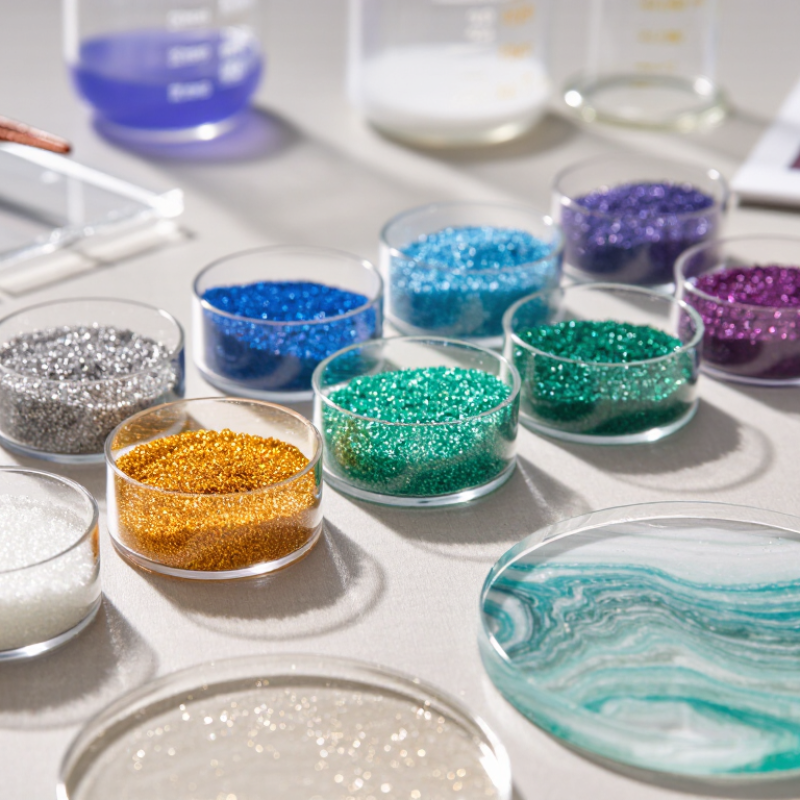
Epoxy resin mica powder is a fine mineral pigment used to create pearlescent effects in cured resin. It combines mica’s reflective platelets with colorants, producing layered flashes rather than flat color. Particle size affects the result: finer grades give smoother surfaces, while larger flakes create stronger sparkle and visible texture. The powder must remain dry and disperse evenly. Moisture can cause clumps, dull patches, or surface defects.

According to Grand View Research, the global epoxy resin market was valued at approximately USD 12.6 billion in 2023. This supports continued demand for decorative resin materials in coatings, crafts, flooring, and composite applications. The U.S. Geological Survey reported global mica mine production near 350,000 metric tons in 2023, showing the mineral’s established industrial supply base. Still, mica powder is not a universal additive. Excess loading may increase viscosity, weaken flow, and trap bubbles. Small trials matter.

In practical production, technicians often test 0.5% to 5% powder by weight, depending on color strength and particle size. Gentle mixing helps protect the mica’s plate-like structure. High-shear mixing can reduce visual brilliance. Cure behavior also deserves attention. A beautiful wet mixture may look different after curing. That difference is easy to underestimate. Testing under natural and artificial light is more reliable than judging one sample. Reported market figures vary by methodology, so buyers should verify specifications, safety data, particle distribution, and batch consistency before selecting a China-based manufacturer.

Raw Materials and Manufacturing Process in China

China’s epoxy resin mica powder industry depends on carefully selected raw materials. Natural mica is cleaned, dried, and milled into controlled particle sizes. Its plate-like structure creates shimmer, depth, and smooth dispersion in cured resin. Epoxy resin, hardener, mineral pigments, and flow additives must also meet stable quality requirements. Moisture is a quiet problem.

During manufacturing, technicians usually inspect mica color, thickness, and contamination before processing. The material is dried with controlled heat, then crushed and separated through fine screens. Epoxy components are measured by weight, not guesswork. Mixing speed matters because excessive shear can damage mica’s reflective surface. After blending, samples are checked for color consistency, viscosity, curing behavior, and sedimentation. A dependable Chinese manufacturer should keep batch records and provide test data. Still, no process is perfect. Particle variation can appear, especially when natural mica sources change.

Tips: Ask for a recent sample before placing a large order. Test it with your actual resin system. Check particle size, moisture content, storage conditions, and recommended mixing ratio. Photograph the cured sample under different lighting. This small step often reveals dullness, uneven sparkle, or settling that a standard data sheet may not show.

Typical Temperature Windows in Epoxy Resin–Mica Powder Manufacturing

Epoxy resin production commonly involves heated reaction and blending, while mica is dried, optionally calcined, milled, and classified before being incorporated into a formulation. The ranges shown are typical industrial operating windows and may vary according to resin chemistry, mica grade, particle size, moisture content, and end-use requirements.

Key Performance Properties and Quality Standards

China Top Epoxy Resin Mica Powder Manufacturer?

Mica Powder For Resin should deliver consistent color, clean dispersion, and stable visual effects. In epoxy applications, particle size strongly affects shine, texture, and settling. Fine powder creates smoother surfaces. Coarser grades produce stronger sparkle. Moisture matters too. Damp mica may cause clumps, bubbles, or uneven curing. A reliable manufacturer should control drying, screening, and packaging under documented procedures.

Quality standards need more than an attractive sample. Request particle-size data, moisture results, color records, and batch traceability. A certificate of analysis supports professional evaluation. Safety data sheets are also essential for proper handling. Check resin compatibility with a small test batch before production. Observe mixing, curing, surface gloss, and color stability after several days. No powder is perfect. Slight shade variation may still occur between batches, especially with pearlescent effects.

Tips: Store sealed powder in a dry room. Measure by weight, not volume. Add it slowly while mixing at low speed. Test heat and light exposure when the finished product faces demanding conditions. Keep a retained sample from every batch. This simple habit can reveal changes later. One practical detail is often missed: transparent epoxy can magnify tiny impurities, so inspect the cured surface under angled light.

Major Applications Across Industrial and Creative Sectors

Mica Powder For Epoxy serves both industrial and creative applications. Its thin, reflective particles can improve visual depth, surface character, and color stability in cured resin. Grand View Research estimated the global epoxy resin market at about USD 11.4 billion in 2023. The report also projects continued growth through 2030, supported by construction, electronics, transportation, and protective coatings. These sectors demand consistent dispersion and reliable curing performance.

In industrial work, mica powder can support decorative flooring, electrical encapsulation, corrosion-resistant coatings, and engineered panels. In creative studios, makers use it for river tables, jewelry, trays, wall art, and imitation stone effects. A few grams can create a cloudy pearl finish. Too much powder may weaken flow and trap small bubbles. That detail is often underestimated. Testing remains essential because resin systems differ in viscosity, cure speed, and pigment tolerance. USGS mineral reports identify mica as an important industrial mineral used in electrical, construction, and coating applications.

Tips: Start with a small batch and record the powder-to-resin ratio. Sieve the powder for smoother surfaces. Mix slowly near room temperature. Check the technical data sheet for particle size and moisture content. I have found that visual color tests can mislead under workshop lighting. Review the cured sample after 24 to 72 hours. Some effects look excellent at first, yet become dull after full curing.

How to Evaluate a Top Chinese Manufacturer

How to Evaluate a Top Chinese Manufacturer

A top Chinese epoxy resin mica powder manufacturer should prove performance, not merely display polished samples. The U.S. Geological Survey Mineral Commodity Summaries 2024 lists China among the world’s major mica-producing countries. That position supports supply capacity, but it does not guarantee consistent coating quality. Ask for recent batch records, particle-size distribution, moisture content, oil absorption, and whiteness data. A reliable supplier should provide a traceable certificate for every production lot.

Technical verification matters more than sales claims. Request samples from at least three batches, then test them in your actual epoxy system. Check dispersion under normal mixing speeds, surface gloss, color stability, and sedimentation after storage. ASTM-based testing can support tensile, adhesion, and heat-resistance comparisons. The 2024 Global Epoxy Resin Market analysis by Grand View Research identifies growing demand for high-performance epoxy applications, making repeatable filler quality increasingly important. Small variations can become visible on a large coated panel.

Look closely at factory controls. Confirm calibrated instruments, documented incoming-material inspection, sealed packaging, and a clear complaint process. ISO 9001 certification can indicate process discipline, but it is not proof of product suitability. I once judged a supplier by an attractive sample and ignored weak batch documentation. That was a mistake. A factory may be responsive and still need stronger technical records. Evaluate evidence, visit the production site when practical, and approve only after controlled trial production.

Packaging, Customization, and Export Support

China Top Epoxy Resin Mica Powder Manufacturer?

Reliable packaging protects mica powder from moisture, dust, and handling damage. For Black Mica Powder For Resin, suppliers commonly use sealed inner bags inside strong export cartons. Each carton can carry the product name, batch number, net weight, and handling instructions. Pallets should remain stable during loading, storage, and long-distance transport.

Customization should match the buyer’s production process. Available options may include particle size, color tone, surface treatment, bag weight, and carton dimensions. Small sample orders help confirm the powder’s appearance and dispersion before larger production. A first packaging design may need revision. Labels can look clear on screen but become crowded on a real bag.

Export support requires careful document control. A professional supplier can prepare commercial invoices, packing lists, certificates of analysis, safety data sheets, and origin documents when requested. The packing list should match the actual carton count and weights. This detail prevents avoidable delays. Experienced teams also check pallet measurements, container space, and destination requirements before shipment. However, buyers should verify local import rules independently, because requirements can change between markets. Fast replies are useful, but accurate replies matter more.

Supplier Selection and Purchasing Considerations

China Top Epoxy Resin Mica Powder Manufacturer?

When selecting a supplier, examine more than the product catalogue. Ask for mica purity, particle size distribution, moisture content, and color stability data. A reliable manufacturer should provide recent test reports, safety documentation, and clear batch numbers. Samples matter. Test the powder in your actual epoxy system, not only in a supplier’s demonstration resin. Different curing agents can change brightness, settling, and surface texture.

For Adding Mica Powder To Epoxy, check whether the powder disperses evenly without forming floating clusters. Mix a measured 2% to 5% loading, then observe it after curing for 24 to 72 hours. Inspect the surface under direct light. Fine particles may create a smoother finish, while larger flakes can produce stronger visual depth. Your target effect decides the specification. Do not accept vague terms such as “premium grade” without measurable details.

Purchasing decisions also depend on minimum order quantity, packaging, lead time, and replacement procedures. Request moisture-resistant inner bags and sealed cartons for transport. Compare quotations by usable weight, not only price per package. A low offer may hide inconsistent batches or weak technical support. I would still question every promised delivery date. Delays happen. A written production schedule and pre-shipment sample reduce surprises, although they cannot remove every risk. Record test results before approving a larger order.

China Top Epoxy Resin Mica Powder Manufacturer? - Supplier Selection and Purchasing Considerations
Evaluation Dimension Typical Requirement for Epoxy Resin Mica Powder Why It Matters Recommended Verification Method Purchasing Consideration
Mineral Type Muscovite or phlogopite mica, depending on the required electrical, thermal and optical properties. Muscovite generally offers good electrical insulation and light color, while phlogopite usually provides better heat resistance and a darker appearance. Review the mineral identification report, X-ray diffraction result or equivalent technical documentation. Specify the mica type before requesting quotations; mineral type can affect color, dielectric performance and heat resistance.
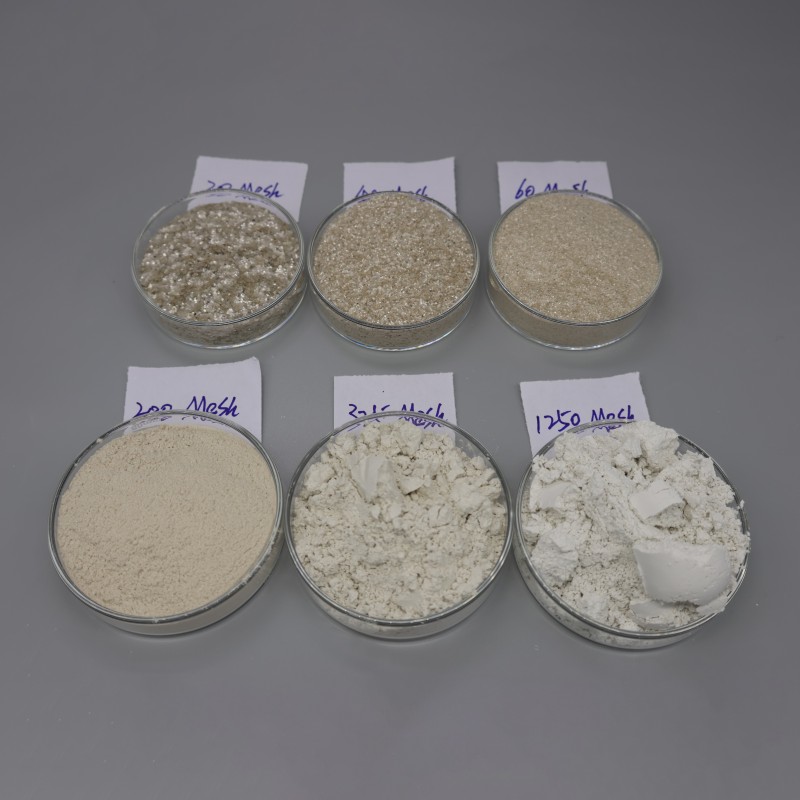
Particle-Size Distribution Common powder grades include approximately 200 mesh, 325 mesh and fine grades below 20 micrometres. The required D50 and maximum particle size should be stated separately. Particle size influences surface finish, dispersion, viscosity, sedimentation and the appearance of cured epoxy coatings or castings. Request laser particle-size analysis or sieve analysis showing D10, D50, D90 and residue on the selected sieve. Do not rely on mesh size alone. Ask for the complete particle-size distribution and batch-to-batch tolerance.
Color and Whiteness White, off-white, silver, golden or brownish mica may be available, depending on the mineral source and processing method. Color affects decorative coatings, pearlescent effects, electrical insulation appearance and the final shade of transparent or pigmented epoxy. Compare a sealed reference sample under consistent lighting and request a whiteness or color test where applicable. Define an approved color standard and acceptable color difference before mass purchasing.
Moisture Content Dry mineral powder is normally preferred; a common internal purchasing target is no more than about 0.5% moisture, subject to the formulation. Excess moisture can increase bubbles, reduce wetting, affect curing behavior and impair electrical insulation performance. Use a moisture analyzer or oven-drying method and verify the result on several production lots. Require moisture control during drying, packing and storage. Resealable moisture-resistant packaging is beneficial.
Oil Absorption Often reported in grams of linseed oil absorbed per 100 g of powder; the acceptable range depends on particle size and surface area. Higher oil absorption can increase epoxy viscosity and resin consumption while influencing loading level and flow. Request the supplier's oil-absorption test method and compare results using the same laboratory procedure. Use the measured value to calculate resin demand rather than selecting solely by price per kilogram.
Epoxy Dispersion The powder should wet and disperse uniformly in the selected epoxy system without visible agglomerates under the intended mixing conditions. Poor dispersion may create weak areas, surface defects, uneven color and inconsistent dielectric properties. Conduct a laboratory let-down test using the actual resin, hardener, mixing speed and loading level. Request a sample before approving the supplier. A compatible grade may reduce mixing time and reject rates.
Thermal Stability Mica is an inorganic mineral with strong heat resistance; the practical limit is determined by the mica type, coating treatment and epoxy system. Thermal stability is important for electrical insulation, heat-resistant coatings, potting compounds and industrial composites. Review thermal analysis data and perform a heat-aging test on the complete epoxy formulation. Evaluate the finished compound rather than the mineral powder alone, because epoxy degradation may occur before mica degradation.
Electrical Insulation High-quality mica is commonly selected for dielectric and insulating applications, but performance depends on purity, moisture, orientation and resin formulation. Electrical properties affect insulation reliability, breakdown strength and long-term performance in electrical components. Request volume resistivity, dielectric strength or dielectric-loss data where relevant, and test the finished compound. Specify the test standard, specimen preparation and conditioning requirements to make supplier data comparable.
Purity and Foreign Matter Low levels of quartz, feldspar, iron-bearing minerals, grit and other non-mica particles are preferred for high-performance epoxy applications. Foreign matter can increase abrasion, darken the product, reduce insulation reliability and cause processing defects. Review X-ray diffraction, microscopy, chemical analysis and residue-on-sieve results. Set limits for visible impurities, coarse particles and magnetic or metallic contamination where necessary.
Heavy-Metal and Regulatory Compliance Compliance should be confirmed for the intended market and application, including restrictions on lead, cadmium, mercury and hexavalent chromium when applicable. Regulatory non-compliance can delay customs clearance, restrict market access and create product-liability risks. Request a recent third-party test report and a signed material declaration covering the destination market. Check requirements under the applicable chemical, environmental, packaging and product-safety regulations before ordering.
Surface Treatment Untreated mica is common, while silane or other surface treatments may be considered for improved resin wetting and interfacial bonding. Surface treatment can influence adhesion, moisture resistance, dispersion and mechanical performance. Ask for treatment chemistry, treatment level and comparative resin-compatibility data. Confirm that the treatment is compatible with the epoxy resin, curing agent and service temperature.
Packaging Common industrial packaging includes moisture-resistant bags, woven bags with inner liners or sealed multiwall paper bags; larger quantities may use big bags. Improper packaging can cause moisture pickup, contamination, caking and weight discrepancies during transportation. Inspect packaging specifications, net weight, palletization and seal integrity on the pre-shipment sample. State the required bag size, labeling, pallet condition and protection against water during ocean transport.
Batch Consistency Particle size, moisture, color, purity and oil absorption should remain within agreed specifications from lot to lot. Consistent raw material reduces formulation adjustment, production downtime and finished-product variation. Compare certificates of analysis from multiple lots and retain an approved reference sample. Include specification tolerances, inspection rights and corrective-action procedures in the purchase agreement.
Sampling and Trial Approval A representative pre-production sample should be tested in the buyer's actual epoxy formulation before commercial approval. Laboratory data alone may not predict dispersion, viscosity, surface appearance or curing performance in the final formulation. Run a controlled trial with fixed resin ratio, loading, mixing procedure, cure schedule and performance tests. Approve the grade only after the sample meets both processing and finished-product requirements.
Technical Documentation Important documents include a technical data sheet, safety data sheet, certificate of analysis, specification sheet and country-of-origin information. Complete documentation supports quality control, worker safety, customs procedures and regulatory review. Check document dates, test methods, batch numbers and consistency between the documents and the physical sample. Make document submission a condition of purchase and require notification before any material or process change.
Lead Time and Supply Capacity Lead time depends on grade, production schedule, packaging and export arrangements; it should be confirmed for both trial and repeat orders. Reliable delivery protects production planning and reduces the risk of emergency substitutions. Review historical delivery performance, production capacity and contingency arrangements. Compare total supply reliability rather than selecting only the lowest quoted unit price.
Total Delivered Cost Evaluate product price together with packaging, inland transport, freight, insurance, duties, inspection and potential formulation adjustments. A lower purchase price may be offset by higher moisture, poor dispersion, greater resin consumption or increased rejection. Prepare a landed-cost model using the same Incoterm, quantity, destination and quality requirements. Use cost per accepted kilogram or cost per finished part as a more meaningful comparison than price per kilogram alone.

Sericite Mica Powder: Benefits, Applications, Selection Tips, and Industry Insights

Sericite mica powder is a fine-grained, lamellar mineral filler valued for its soft texture, smooth surface feel, good whiteness, and chemical stability. Its layered structure supports improved barrier performance, suspension stability, dimensional control, and surface uniformity. Recent 2024 industry market assessments project global coatings demand to expand at approximately 4% annually through 2030, increasing interest in mineral fillers that improve appearance and durability without significantly increasing formulation complexity.

In paints and coatings, sericite mica powder can enhance smoothness, weather resistance, crack resistance, and decorative finish. In plastics and rubber, its low hardness, controlled particle size, and good dispersion help reduce shrinkage while supporting dimensional stability and mechanical performance. Ceramics and other industrial systems may also benefit from its thermal and chemical stability. Cosmetic-grade material is selected for its silky skin feel, whiteness, and compatibility with carefully controlled formulations. These applications align with broader plastics-compounding forecasts, which commonly indicate annual growth of about 3–4% in the current decade.

Selection should focus on particle-size distribution, whiteness, moisture content, purity, surface treatment, and batch consistency. Fine grades generally provide smoother finishes, while coarser grades may offer stronger reinforcement or barrier effects. Reliable supply also depends on controlled grinding, classification, inspection, and export-grade packaging, ensuring stable performance across coatings, paints, plastics, cosmetics, rubber, and ceramic formulations.

FAQS

What should epoxy resin mica powder provide?

It should disperse cleanly, maintain consistent color, and create stable visual effects. Fine particles produce smoother surfaces. Coarse particles create stronger sparkle.

Why does moisture content matter?

Damp powder may form clumps, bubbles, or uneven curing. Keep it dry. Request moisture results for every production batch.

Which quality documents should a supplier provide?

Request particle-size data, moisture results, color records, and batch traceability. A certificate of analysis supports evaluation. Safety data helps with proper handling.

How can particle size affect the finished epoxy?

Fine powder usually creates a smoother appearance. Coarser powder can produce brighter sparkle and more visible texture. Settling may also increase.

How should a powder sample be tested?

Test samples from several production batches in your actual epoxy system. Check mixing, gloss, color stability, curing, and sedimentation.Test before scaling.

What mixing method is recommended?

Measure the powder by weight, not volume. Add it slowly while mixing at low speed. This can reduce clumps and trapped bubbles.

How should mica powder be stored?

Store sealed containers in a dry room. Keep packaging closed between uses. Retain a small sample from each batch for later comparison.Keep it dry.

Can transparent epoxy hide small impurities?

No. Transparent epoxy can magnify tiny particles and surface defects. Inspect the cured surface under angled light.Small defects become obvious.

Can color vary between production batches?

Slight shade differences may occur, especially with pearlescent effects. Compare retained samples and review color records before large production.Perfect consistency is difficult.

How should a manufacturer be evaluated?

Examine factory controls, calibrated instruments, incoming inspection, sealed packaging, and complaint handling. A polished sample is not enough. I once trusted appearance too quickly and overlooked weak documentation.

Conclusion

Epoxy Resin Mica Powder is a functional effect material made by combining selected mica substrates with suitable colorants and surface treatments for use in epoxy resin systems. In China, manufacturers typically control the process through raw material screening, mica preparation, coating, drying, milling, and particle classification. A reliable product should offer consistent color, smooth dispersion, strong heat and chemical resistance, good light stability, and stable performance during curing. Clear quality standards, batch testing, and precise particle-size control are essential for dependable results.

The material serves a wide range of industrial and creative applications, including decorative surfaces, coatings, crafts, artwork, furniture finishes, and customized resin products. When evaluating a top Chinese manufacturer, buyers should review production capabilities, quality management, technical support, sample consistency, and customization options. Proper packaging, moisture protection, export documentation, and responsive logistics support are also important. Purchasing decisions should consider product specifications, minimum order quantities, lead times, pricing, after-sales communication, and the supplier’s ability to provide stable long-term cooperation.

Benjamin

Benjamin

Benjamin is a dedicated marketing professional with a profound expertise in non-metallic mineral materials, focusing on the processing, production, and supply for both domestic and international industrial clients. With a deep understanding of products such as mica, talc, vermiculite, bentonite,......
Previous China Top 10 Vermiculite Plaster Manufacturers?