n modern manufacturing, choosing the right mineral filler can have a significant impact on product performance, processing stability, and overall production efficiency. Calcined mica powder is a heat-treated mica material that combines the natural advantages of mica's layered structure with improved thermal stability, cleanliness, and appearance.
With properties such as thermal stability, electrical insulation, chemical stability, low thermal conductivity, and a natural plate-like structure, calcined mica powder can be used in a wide range of industrial applications. These include coatings, plastics, rubber, insulation materials, refractory products, construction materials, welding materials, and decorative finishes.
However, not every calcined mica product is the same. Raw material type, calcination conditions, particle size, chemical composition, color, moisture, and quality control can all affect the performance of the final product.
For industrial buyers, understanding these factors is essential when selecting a reliable calcined mica powder supplier.
What Is Calcined Mica Powder?
Calcined mica powder is produced by heating selected natural mica under controlled temperature conditions.
Calcination is a thermal treatment process. Depending on the raw material and process conditions, it can reduce certain volatile components and surface impurities while changing the color and improving the heat-treated stability of the mica.
The natural layered structure of mica is largely retained after processing. This plate-like structure is one of the most important reasons mica is used as a functional mineral filler.
Typical properties of calcined mica powder include:
-
·Good thermal stability
-
·Good electrical insulation
-
·Chemical stability
-
·Low thermal conductivity
-
·Plate-like particle structure
-
·Good barrier characteristics
-
·Low moisture
-
·Consistent appearance when properly processed
The exact properties of a calcined mica product depend on its mineral source, calcination process, grinding or classification method, and particle-size distribution. Therefore, buyers should always evaluate the technical specification of the actual grade rather than relying only on the general term "calcined mica."
Key Properties of Calcined Mica Powder
1. Thermal Stability
Thermal stability is one of the main reasons manufacturers choose calcined mica.
Because the mica has undergone controlled heat treatment, calcined grades can be suitable for applications where the filler is exposed to elevated temperatures.
Potential applications include:
The actual temperature performance depends on the mica mineral, calcination conditions, particle size, and complete formulation. For high-temperature applications, testing the selected grade under actual operating conditions is recommended.
2. Plate-Like Particle Structure
Mica has a naturally layered crystal structure. After grinding and classification, mica particles retain a characteristic plate-like morphology.
This structure can contribute to:
-
·Barrier performance
-
·Surface texture
-
·Dimensional stability
-
·Reinforcement
-
·Electrical insulation
-
·Thermal resistance
In coating systems, plate-like particles can create a more tortuous path for moisture and corrosive media. This can help improve barrier protection when the mica is properly dispersed within the coating system.
3. Electrical Insulation
Mica is well known for its electrical insulating properties.
As a result, calcined mica can be considered for selected electrical insulation and heat-resistant insulation applications.
However, electrical performance depends on more than the mineral itself. Moisture, purity, particle size, binder composition, processing conditions, and the final material structure can all influence dielectric performance.
For electrical applications, buyers should request relevant test data and specifications from the supplier.
4. Chemical Stability
Calcined mica offers good chemical stability in many industrial formulations.
This makes it useful as a mineral filler in:
-
·Coatings
-
·Plastics
-
·Rubber
-
·Construction materials
-
·Insulation systems
-
·Composite materials
Compatibility should still be evaluated with the specific resin, binder, additives, solvents, and processing conditions used in the final formulation.
5. Low Thermal Conductivity
Mica has relatively low thermal conductivity compared with many metallic materials, which makes mica-based fillers useful in selected thermal insulation and heat-resistant applications.
The thermal conductivity of the final product depends on the complete formulation and processing method rather than on the mica filler alone.
Calcined Mica Powder Applications
Calcined mica powder is a versatile mineral filler, but its suitability depends on the specific grade and application requirements.
1. Calcined Mica Powder for Coatings
Coatings are one of the important application areas for mica-based mineral fillers.
Calcined mica can be used in:
Its plate-like structure can help improve barrier properties, film integrity, surface texture, and dimensional stability.
For protective coatings, mica can also help create a longer diffusion path for moisture and corrosive substances when properly oriented and dispersed in the coating film. (Mica for Coatings)
Different particle sizes should be selected according to the coating formulation and desired surface finish.
Fine grades may be preferred for smooth dispersion, while coarse calcined mica flakes can provide a more visible mineral texture.
2. Calcined Mica Powder for Plastics
In plastics and polymer composites, calcined mica can function as a mineral filler or reinforcing component.
Depending on the polymer system, mica may contribute to:
-
·Dimensional stability
-
·Stiffness
-
·Heat resistance
-
·Electrical insulation
-
·Surface properties
-
·Reinforcement
Particle size and aspect ratio are particularly important in polymer applications.
The best grade depends on the polymer type, processing method, loading level, dispersion requirements, and target mechanical properties. Manufacturers should conduct formulation trials before selecting a production-grade material.
3. Calcined Mica Powder for Rubber
Mica can also be incorporated into selected rubber formulations.
Its plate-like morphology and mineral stability may contribute to:
-
·Dimensional stability
-
·Heat resistance
-
·Reinforcement
-
·Barrier properties
-
·Surface characteristics
The appropriate particle size should be determined according to the rubber compound and processing equipment.
4. Calcined Mica for Insulation Materials
Mica is widely used in insulation because of its electrical insulation and heat-resistant characteristics.
Calcined mica powder can be used in selected:
-
·Electrical insulation materials
-
·Heat-resistant insulation
-
·Insulation boards
-
·Industrial insulation formulations
-
·Composite insulation systems
For electrical-grade products, purity, moisture, particle size, and dielectric performance should be carefully evaluated.
5. Calcined Mica for Refractory and Heat-Resistant Materials
Calcined mica can be incorporated into certain refractory and heat-resistant formulations.
Potential applications include:
However, calcined mica should not be considered a universal refractory material. Its suitability depends on the complete formulation and the temperature and atmosphere of the intended application.
6. Calcined Mica for Construction and Decorative Materials
Coarse mica flakes can create a distinctive natural mineral appearance in construction and decorative products.
Potential applications include:
-
·Decorative wall coatings
-
·Floor coatings
-
·Mortar
-
·Artificial stone
-
·Terrazzo-style materials
-
·Decorative panels
-
·Architectural surface finishes
For these applications, particle size, color, flake shape, and visual consistency can be particularly important.
Calcined Mica Powder vs. Natural Mica Powder
Calcination does not necessarily make mica better for every application. Instead, it modifies the material and can make it more suitable for applications requiring specific thermal or appearance characteristics.
| Property |
Natural Mica Powder |
Calcined Mica Powder |
| Thermal treatment |
No |
Controlled heat treatment |
| Thermal stability |
Good |
Improved for suitable grades |
| Layered structure |
Retained |
Largely retained |
| Appearance |
Depends on raw material |
Modified by calcination |
| Heat-treated stability |
Standard |
Generally improved |
| Typical applications |
General mineral filler applications |
Heat-resistant, insulation, coating, construction, and decorative applications |
| Selection factors |
Mineral type, purity, particle size |
Mineral type, calcination, purity, particle size, color, and application |
The correct choice should therefore be based on application requirements rather than product names alone.
Calcined Mica Flakes vs. Calcined Mica Powder
The terms "calcined mica flakes" and "calcined mica powder" are sometimes used interchangeably, but particle size and morphology can make a significant difference in practical applications.
Calcined Mica Powder
Fine calcined mica grades are generally selected when manufacturers need:
-
·Fine dispersion
-
·Mineral filler performance
-
·Smooth surface characteristics
-
·Controlled particle size
-
·Compatibility with coating or polymer formulations
Calcined Mica Flakes
Coarser calcined mica flakes are more suitable when visible particle structure or mineral texture is required.
They can be used in:
The correct grade should be selected according to the required mesh size, visual effect, dispersion, and processing method.
What Is Silver Calcined Mica?
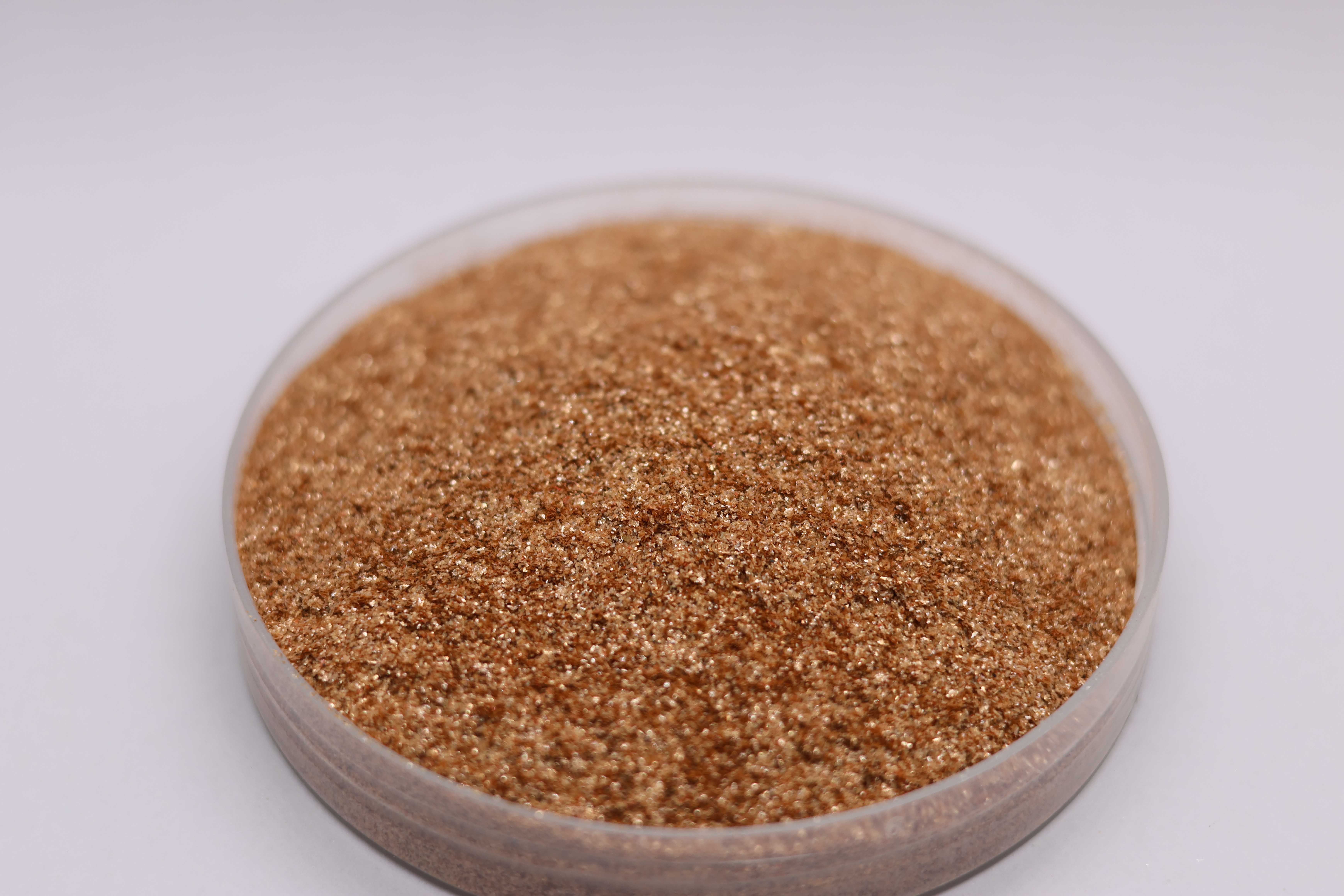
Silver calcined mica is a specially processed mica product that develops a distinctive silver appearance after controlled thermal treatment.
Unlike standard fine mica powder, the current silver calcined mica supplied by WANCHENG MINERAL is available in 10 mesh, 20 mesh, and 40 mesh grades.
These are relatively coarse grades and are therefore particularly suitable for applications where visible mica particles or a decorative flake effect is desired.
Potential applications include:
The natural layered structure of mica contributes to the product's visual reflection, thermal stability, chemical stability, and insulation characteristics. (Silver Calcined Mica)
For customers requiring a specific color or particle-size distribution, samples should be tested before bulk production.
Muscovite Mica Powder vs. Calcined Mica Powder
A common source of confusion in the mica industry is the difference between muscovite mica powder and calcined mica powder.
The two terms describe different characteristics.
Muscovite refers to a specific type of mica mineral.
Calcined refers to a thermal treatment process.
Therefore, muscovite mica can be used as a raw material and subsequently calcined. In this case, the product can be described according to both its mineral type and processing method.
Muscovite mica powder is valued for properties including electrical insulation, heat resistance, chemical stability, low thermal expansion, and its characteristic plate-like structure. (Muscovite Mica)
The choice between muscovite mica powder and calcined mica should depend on:
How to Choose the Right Calcined Mica Powder
Selecting a calcined mica product involves more than comparing price per ton.
1. Mineral Type
Different mica minerals can have different chemical compositions, colors, and thermal characteristics.
The supplier should clearly identify the raw material and mineral type used to produce the calcined mica.
2. Particle Size and Mesh
Particle size affects:
·Fine and coarse grades serve different purposes.
For example, the silver calcined mica currently supplied by WANCHENG MINERAL is available in 10, 20, and 40 mesh, making it suitable for applications requiring visible coarse mica particles or decorative mineral texture. (Calcined Mica Powder)
3. Chemical Composition
Chemical composition should be checked against the requirements of the final application.
Typical parameters may include:
-
·SiO₂
-
·Al₂O₃
-
·K₂O
-
·Fe₂O₃
-
·MgO
-
·CaO
-
·Na₂O
-
·Loss on ignition
-
·Moisture
The actual composition varies according to raw material source and production conditions. Therefore, the supplier's TDS and COA should be used as the primary reference.
4. Color and Appearance
Color consistency can be important in decorative coatings and visible mineral applications.
Buyers should evaluate:
-
·Base color
-
·Particle appearance
-
·Flake integrity
-
·Color consistency
-
·Surface cleanliness
For decorative products, a representative sample is often more useful than a specification sheet alone.
5. Moisture
Moisture can affect powder flowability, storage, dispersion, and processing.
A reliable supplier should maintain appropriate packaging and storage controls to keep the product dry and clean during transportation.
6. Batch Consistency
For industrial production, consistent quality is essential.
Buyers should consider consistency in:
-
·Particle size
-
·Chemical composition
-
·Color
-
·Moisture
-
·Calcination
-
·Packaging
Stable batch quality can reduce formulation adjustments, production downtime, and quality-control problems.
What Should You Ask a Calcined Mica Powder Supplier?
Before placing a bulk order, B2B buyers should request sufficient technical and commercial information.
A professional calcined mica powder manufacturer should be able to provide, where applicable:
Technical Documents
-
Technical Data Sheet (TDS)
-
Safety Data Sheet (SDS)
-
Certificate of Analysis (COA)
-
Chemical composition
-
Particle-size specification
-
Moisture specification
-
Product photographs
-
Packaging information
Product Samples
Sample testing is strongly recommended before committing to a large order.
The sample should be tested in the customer's actual formulation or production process whenever possible.
Production Information
Buyers may also evaluate:
Supply Reliability
For long-term purchasing, stable supply can be as important as the initial product price.
A supplier should be able to maintain reasonably consistent specifications between production batches and provide appropriate technical support when required.
FAQS
: Calcined mica powder is natural mica that has undergone controlled thermal treatment. The process modifies certain physical and chemical characteristics and can improve thermal stability, cleanliness, and appearance.
The primary difference is thermal treatment. Natural mica is mechanically processed without calcination, while calcined mica is subjected to controlled heating before or during further processing.
Calcined mica powder is used in selected coating, plastic, rubber, insulation, construction, refractory, welding, and decorative applications.
Available mesh sizes depend on the product grade and application. Regular calcined mica can be customized according to application requirements. The current special silver calcined mica grade is available in 10 mesh, 20 mesh, and 40 mesh.
What is the difference between calcined mica powder and calcined mica flakes?
Silver calcined mica is a heat-treated mica product with a distinctive silver appearance. The current WANCHENG MINERAL grade is supplied in 10, 20, and 40 mesh and is intended primarily for coarse decorative and functional applications.
Yes. Calcined mica can be used in selected protective, architectural, waterproof, high-build, textured, and decorative coating systems.
Yes. Depending on the formulation, calcined mica can function as a mineral filler or reinforcing component in selected plastic systems.
Consider mineral type, particle size, chemical composition, color, moisture, thermal requirements, electrical properties, processing method, and target application.
Conclusion: Choosing the Right Calcined Mica Powder
Calcined mica powder is a versatile functional mineral that combines mica's natural plate-like structure with the benefits of controlled thermal treatment.
Its potential advantages include:
These characteristics make calcined mica suitable for a broad range of industrial applications, including coatings, plastics, rubber, insulation materials, construction products, refractory materials, welding materials, and decorative finishes.
However, there is no single calcined mica grade that is ideal for every application.
The right product should be selected based on mineral type, particle size, chemical composition, calcination conditions, color, moisture, purity, batch consistency, and the requirements of the final formulation.
For B2B buyers, choosing a reliable calcined mica powder manufacturer and supplier is therefore just as important as selecting the material itself.
A qualified supplier should provide consistent specifications, representative samples, technical documentation, reliable packaging, stable supply, and practical support throughout the purchasing process.
If you are looking for calcined mica powder, calcined mica flakes, or silver calcined mica for an industrial application, requesting a sample and technical specification is a practical first step toward selecting the right grade.