Leave Your Message
0%

When you're sourcing Fireproof Vermiculite from around the globe, it's really more than just comparing prices. You gotta dig into details like where the mineral actually comes from, its expansion grade, particle size, moisture levels, bulk density, and how well it handles heat. All these little things actually influence how the material performs in things like furnace linings, fireproof boards, insulation panels, or even high-temp packaging.

A seasoned sourcing team will ask for recent lab tests, safety data sheets, samples, and records from previous batches — all of that helps build trust. And don’t forget, independent testing is a big plus! It can verify stuff like thermal conductivity, max service temperature, chemical stability, and how much weight is lost on ignition. Checking out the supplier’s warehouse and packaging — like if it’s clean, sealed, and properly labeled — often tells you more than slick sales talk.

Those small details really do count.

Now, don’t just assume that Fireproof Vermiculite is automatically good for every application. Its performance depends on a bunch of factors—like the grade, binder, thickness, how you install it, and the conditions it’ll face. It’s smart to double-check the technical standards and import rules with knowledgeable folks in each market you’re shipping to. We’ve seen specs change after testing, so staying alert to that possibility is wise. For example, a lower-density grade might save you on shipping, but could be trickier to handle. Or a quote with a higher price might suggest stricter quality control, but that alone doesn’t guarantee it'll perform better.

In the end, good global sourcing comes down to solid evidence, clear traceability, and honest reviews. It’s about comparing suppliers using the same technical standards, inspecting packaging before it ships, and keeping track of all approvals. Taking this approach will help you pick the right Fireproof Vermiculite more confidently, without blindly trusting initial impressions or assumptions that seemed reasonable at first glance.

How to Choose Fireproof Vermiculite for Global Sourcing?

Defining Fireproof Vermiculite Grades and Performance Requirements

Choosing Fireproof Vermiculite for global sourcing starts with defining the grade, not comparing prices. Vermiculite boards usually combine exfoliated mineral particles with inorganic binders. Particle size affects surface smoothness, strength, and thermal conductivity. Density also matters. A lightweight board may insulate well, but it can chip during cutting. A denser grade usually handles vibration better.

The USGS Mineral Commodity Summaries 2024 reported approximately 100,000 metric tons of U.S. vermiculite mine production in 2023. This figure shows a broad industrial supply base, but it does not confirm fire performance. Buyers should request particle-size distribution, density tolerance, moisture content, thickness tolerance, and maximum continuous-use temperature. Ask for test evidence under ASTM E84, ASTM C411, or EN 13501-1, depending on the destination market. These standards measure different properties. They should not be treated as interchangeable.

For Fireproof Vermiculite Boards, inspect both laboratory results and production samples. A useful specification may require 350–700 kg/m³ density, low shrinkage after heating, and stable dimensions at the stated service temperature. Exact limits depend on binder chemistry and board thickness. Check a cut edge under magnification. Loose grains suggest weak bonding. A perfect laboratory sheet can still fail after ocean humidity, pallet vibration, and repeated heating. That weakness deserves more testing. Request batch records, third-party reports, and retained samples before approving global shipments.

How to Choose Fireproof Vermiculite for Global Sourcing?

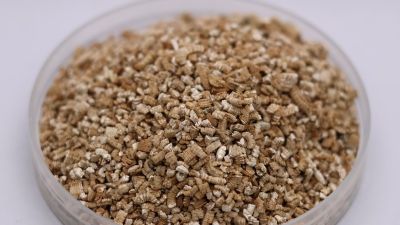
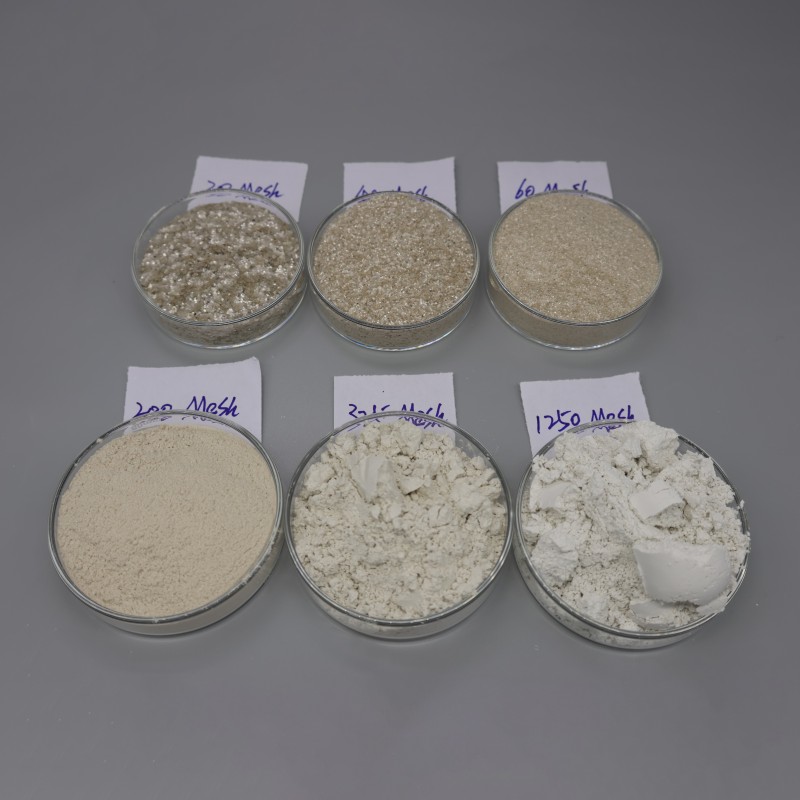
Vermiculite grades are commonly differentiated by particle size, loose bulk density, and thermal performance. Coarser grades are generally preferred for lightweight insulating fills, while finer grades are used in boards, coatings, shaped refractories, and blended formulations.

The chart presents representative loose bulk-density ranges for generic particle-size grades. Actual values vary with ore source, expansion ratio, moisture content, and test method. For sourcing, request test data for particle-size distribution, bulk density, thermal conductivity, moisture, and maximum service temperature.

Typical industry ranges compiled from publicly available expanded-vermiculite technical specifications. Values are indicative rather than a universal grade standard. ASTM C516 may be used as a reference for expanded vermiculite loose-fill thermal insulation.

Matching Vermiculite Properties to Fireproofing Applications

How to Choose Fireproof Vermiculite for Global Sourcing?

Matching vermiculite properties to the application matters more than chasing the lowest price. Expanded vermiculite is lightweight, noncombustible, and thermally insulating. However, grades differ sharply in bulk density, particle size, expansion ratio, and moisture content. The U.S. Geological Survey’s Mineral Commodity Summaries 2024 recorded U.S. vermiculite consumption at roughly 100,000 metric tons in 2023. That scale reflects established demand, but it does not guarantee consistent performance between suppliers.

For sprayed fireproofing, choose fine or medium particles with stable expansion and low moisture. Fine grades create smoother coverage around steel beams and complex joints. Castable boards and insulation panels usually need coarser particles, controlled density, and strong binder compatibility. Check thermal conductivity at the intended temperature, not only at room temperature. Also request test results under ASTM E84, ASTM E119, or the relevant EN fire classification standard. A mineral analysis alone is insufficient. It may look professional, but it cannot prove fire endurance.

Global sourcing adds another risk. Long ocean transport can expose bags to humidity and compression. Ask for sealed packaging, batch testing, sieve analysis, loss-on-ignition data, and traceable certificates. I would also compare samples from three production lots. One sample can mislead. The uncomfortable truth is simple: a lower-density grade may reduce weight, yet shrinkage or uneven expansion can weaken the finished system. Procurement teams should test the actual formulation before approving volume orders.

How to Choose Fireproof Vermiculite for Global Sourcing? - Matching Vermiculite Properties to Fireproofing Applications

Vermiculite Property / Sourcing Dimension Fine Grade Medium Grade Coarse Grade Best-Fit Fireproofing Applications
Typical expanded particle size Approximately 0.5–2 mm Approximately 2–4 mm Approximately 4–8 mm Fine grades suit smooth coatings and fillers; larger grades suit lightweight boards, insulation fills, and bulk mixes.
Typical loose bulk density Approximately 90–180 kg/m³ Approximately 70–140 kg/m³ Approximately 60–120 kg/m³ Lower density generally reduces dead load, while higher density can improve packing and handling. Confirm the test method before comparing suppliers.
Thermal conductivity Typically about 0.06–0.10 W/m·K at ambient conditions Typically about 0.05–0.09 W/m·K at ambient conditions Typically about 0.05–0.10 W/m·K at ambient conditions Suitable for thermal barriers, fire-resistant plasters, furnace insulation, and passive fire-protection products. Values vary with density, moisture, temperature, and test direction.
Temperature resistance Non-combustible mineral material; suitable for high-temperature formulations when properly processed Non-combustible mineral material; commonly used in refractory and thermal-insulation mixes Non-combustible mineral material; useful where dimensional insulation and low weight are required Vermiculite can tolerate high temperatures, but the actual service limit depends on grade, binder, atmosphere, moisture, and application design. Validate the complete product system.
Water absorption and moisture sensitivity High surface area; can retain more moisture if not protected Moderate-to-high moisture uptake depending on porosity Porous and moisture-sensitive; requires dry storage and suitable packaging For fireproof plasters and boards, specify moisture conditioning, packaging, and storage requirements because water can change density and thermal performance.
Bonding and mixability Excellent surface coverage and filler distribution; may increase binder demand Good balance between workability, coverage, and lightweight structure Lower surface coverage; may require optimized binder content to prevent segregation Choose fine material for sprayable coatings and smooth renderings; choose medium or coarse material for castable insulation and lightweight panels.
Recommended product form Exfoliated granules, powder blends, coating filler Exfoliated granules, plaster aggregate, board and panel mix Exfoliated granules, loose-fill insulation, refractory castable aggregate The final binder system—cementitious, gypsum-based, clay-based, or resin-based—must be tested with the selected grade.
Fireproofing performance to verify Do not evaluate vermiculite alone as a fire-rated product. Verify the complete assembly for fire resistance, reaction to fire, smoke, adhesion, shrinkage, thermal conductivity, and mechanical strength. Use application-specific tests such as furnace exposure, fire-resistance classification, non-combustibility, or reaction-to-fire testing according to the destination market.
Quality-control documents for global sourcing Request a technical data sheet, certificate of analysis, particle-size distribution, loose bulk density, moisture content, thermal-conductivity data, chemical analysis, packaging specification, and batch traceability. Require representative samples and independent validation before approving a production shipment, especially when the material will be used in certified fire-rated assemblies.
Logistics and packaging considerations Fine particles may create dust; use sealed moisture-resistant bags and dust-control handling Good compromise between filling efficiency and handling stability Higher volume per tonne; confirm container utilization and protection against crushing Compare cost on a delivered cost-per-cubic-metre basis, not only on a cost-per-tonne basis.

Note: The numerical ranges are typical indicative values for expanded vermiculite and can vary with ore source, exfoliation conditions, particle-size distribution, bulk density, moisture, and test methods. Always qualify the material within the intended fireproofing formulation or assembly.

Evaluating Ore Sources, Processing Methods, and Product Consistency

Choosing fireproof vermiculite for global sourcing starts with the ore, not the finished board. Deposit geology affects expansion, purity, and platelet structure. The USGS Mineral Commodity Summaries 2025 notes that vermiculite production data remain incomplete across several producing countries. This makes supplier declarations important. Request the mine location, ore grade, moisture content, and recent laboratory results. A pale, lightweight flake is not automatically better. I would also compare particle-size curves between shipments. Small changes can alter mixing, pressing, and thermal insulation.

Processing controls consistency. Exfoliation temperature, residence time, and cooling speed influence bulk density. A Vermiculite Fireproof Board may appear uniform, yet show weak edges or uneven expansion. Ask for density tolerance, thickness tolerance, compressive strength, and water absorption. Independent testing should follow relevant fire standards, such as EN 13501-1 or ASTM procedures. Under ISO 834-1, the standard fire curve reaches approximately 945°C after 60 minutes. The board must retain its shape under the complete test assembly, not only survive a small laboratory flame. That distinction is often missed.

The European Commission’s Joint Research Centre emphasizes declared performance and controlled test conditions for construction products. Therefore, compare full test reports, not marketing tables. Check batch numbers, sampling dates, and calibration records. My practical concern is simple: one successful sample proves little. Global shipping can introduce moisture, compression, and handling damage. Even careful sourcing needs retesting. There is no perfect consistency.

Checking Global Safety Standards, Testing, and Certifications

How to Choose Fireproof Vermiculite for Global Sourcing?

Global sourcing starts with the intended application, not the lowest quotation. Vermiculite for insulation, fire doors, furnaces, and coatings may require different performance data. Ask suppliers for the technical data sheet, safety data sheet, certificate of analysis, and full test reports. These documents should identify particle size, moisture, bulk density, chemical composition, and thermal behavior. Vague phrases such as “highly fireproof” need supporting evidence.

Check which safety standards apply in the destination market and the final product. A test completed in one country may not satisfy another authority. Request reports from an independent laboratory with ISO/IEC 17025 accreditation, where available. Confirm the test method, sample condition, test date, and tested production batch. Traceability matters. The report should connect clearly to the material you may receive. Samples should be sealed, labeled, and compared with later shipments.

Certifications need careful reading. Some verify a management system, while others confirm a specific product or process. They are not interchangeable. I once treated a certificate as final proof. That was too simplistic. Certification scope, expiration date, issuing body, and covered factory all require checking. A factory audit can also reveal poor dust control, inconsistent storage, or weak batch records. These details affect reliability, even when laboratory results look excellent. Repeating key tests before a large order may cost more, but it can expose hidden variation early.

Comparing Suppliers, Pricing, Packaging, and Shipping Conditions

Choosing fireproof vermiculite for global sourcing requires more than comparing the lowest quotation. Compare suppliers by batch consistency, technical support, and independent test evidence. A Vermiculite Fireproof Insulation Board should include thickness, density, thermal conductivity, service temperature, and fire classification. Request reports linked to the exact production lot. ISO 9001 certification helps, but it does not prove fire performance. The test method matters.

Pricing can be misleading. Some quotes look cheap. Compare the landed cost per square metre, not only the factory price. Include cutting tolerance, moisture-resistant wrapping, pallets, export documents, inspection, and insurance. Ask at least three suppliers for identical specifications. Industry procurement reviews often find major differences caused by density and thickness, not material names. I would still question unusually low prices; savings may hide weaker edges or inconsistent dimensions.

Tips:
Ask for a sealed sample carton. Check whether boards arrive dry, flat, and undamaged. Packaging should use inner moisture protection, corner guards, desiccant, and strong pallets. Photograph loading before shipment. UNCTAD’s Review of Maritime Transport reports that over 80% of global merchandise trade by volume moves by sea, so container humidity deserves attention. The World Bank’s 2023 Logistics Performance Index also highlights differences in tracking and delivery reliability. Confirm Incoterms, port handling, transit time, and claims procedures in writing. A minor oversight here can erase the original price advantage.

Verifying Samples, Quality Control, and Long-Term Supply Reliability

Choosing fireproof vermiculite for global sourcing requires more than comparing prices or reading a product sheet. Request samples from several production batches, not just one carefully selected bag. Check particle size, moisture, color, expansion ratio, and contamination under consistent conditions. Test it wet.

For Incubate Vermiculite( Hatching Vermiculite ), handling performance matters. The material should absorb moisture evenly without collapsing into fine dust. Record how it behaves after storage, mixing, and repeated temperature changes. A laboratory report helps, but practical testing reveals problems that documents may miss. I have found that small differences in grading can affect packing density and moisture control.

Quality control should include batch numbers, retained samples, inspection photos, and clear acceptance limits. Ask whether the supplier can explain test methods and respond quickly to deviations. Records matter. Long-term reliability also depends on production capacity, reserve inventory, packaging strength, and shipping experience across regions. Confirm lead times during peak seasons, not only in quiet months. Supply can shift.

Do not rely on one successful shipment. Review performance every few orders and compare new samples with the approved reference. A single favorable sample can mislead. I would also leave room for improvement, because moisture targets and particle preferences may change after real production use. Consistent communication often proves as important as the mineral itself.

Horticultural Vermiculite: Market Growth, Benefits & Uses—Insights from Grand View Research and Mordor Intelligence

Horticultural vermiculite is gaining attention as demand grows for efficient, sustainable, and high-performance growing media. This lightweight expanded mineral is produced by heating natural vermiculite flakes until trapped moisture creates porous, accordion-like granules. The resulting material is clean, soft, and easy to handle, while its internal structure helps retain water and nutrients without eliminating essential air spaces around plant roots.

Its benefits make it valuable across modern horticulture. Fine grades support seed germination and provide a gentle covering for delicate seeds, while medium grades improve potting mixes and propagation media. Coarse grades offer better aeration and structure for greenhouse production, nursery plants, hydroponic systems, vegetable seedlings, flowers, lawn repair, and soil conditioning. Vermiculite can also help maintain more stable moisture levels, reducing the risk of uneven drying during early root development.

As commercial growers, soil manufacturers, distributors, and agricultural suppliers seek consistent materials, product quality has become increasingly important. Controlled expansion, accurate particle grading, low dust, suitable moisture content, and reliable packaging all influence mixing efficiency and growing performance. Available in fine, medium, and coarse particle sizes, horticultural vermiculite can be selected according to crop requirements, cultivation systems, and bulk-density preferences. Its combination of water retention, aeration, and nutrient-holding capacity supports the continued expansion of professional and home-growing applications.

FAQS

: What should buyers define before comparing vermiculite board prices?

: Define the grade first. Check particle size, density, thickness, moisture, and continuous-use temperature. A lightweight board may insulate well but chip during cutting. A denser board usually resists vibration better. Price alone can mislead.

Which physical properties strongly affect board performance?

Particle size affects surface smoothness, strength, and thermal conductivity. Density influences insulation, handling, and vibration resistance. Request density and thickness tolerances for every production batch. Inspect a cut edge under magnification. Loose grains may indicate weak bonding.

What documents should a global buyer request?

Request a technical data sheet and safety data sheet. Also request a certificate of analysis and complete test reports. Documents should identify particle size, moisture, density, and chemical composition. They should explain thermal behavior clearly. Vague claims need evidence.

How can buyers evaluate the mineral source?

Ask for the mine location, ore grade, moisture content, and recent laboratory results. Compare particle-size curves between shipments. A pale, lightweight flake is not automatically superior. Small changes can affect mixing and insulation. Source data may remain incomplete.

Which fire-testing details require careful checking?

Confirm the destination market and final application first. Different standards measure different properties. They are not interchangeable. Review the test method, sample condition, test date, and production batch. For furnace or door applications, test the complete assembly when required.

Why do processing conditions matter?

Exfoliation temperature, residence time, and cooling speed affect bulk density. Poor control can create weak edges or uneven expansion. Ask for compressive strength, water absorption, density tolerance, and thickness tolerance. A uniform surface can hide internal variation. That risk deserves further testing.

How should buyers verify certificates and laboratory reports?

Check the issuing body, expiration date, certification scope, and covered factory. Where available, prefer independent laboratories with ISO/IEC 17025 accreditation. A management certificate does not prove product performance. I once treated a certificate as final proof. That was too simplistic.

What should happen before approving a large shipment?

Request batch records, retained samples, and third-party reports. Seal and label approval samples carefully. Compare them with later shipments. Test after exposure to humidity, pallet vibration, and repeated heating. Shipping damage matters. One successful sample proves little.

Conclusion

Choosing Fireproof Vermiculite for global sourcing requires a clear understanding of both technical performance and supply reliability. Buyers should first define the required grade, particle size, expansion ratio, thermal resistance, bulk density, and moisture limits according to the intended fireproofing application. The material should then be evaluated by its ore source, processing method, consistency between batches, and ability to maintain stable performance under heat. Different applications may require different combinations of insulation, fire resistance, lightweight structure, and dimensional stability.

A reliable sourcing process also includes reviewing applicable safety standards, laboratory test reports, and recognized certifications. Suppliers should be compared carefully based on product quality, pricing, packaging strength, shipping conditions, production capacity, and communication efficiency. Before placing a long-term order, buyers should request representative samples, verify quality-control procedures, and assess how consistently the supplier can meet specifications. A well-documented evaluation helps reduce quality risks, control total purchasing costs, and establish a dependable international supply relationship.

Benjamin

Benjamin

Benjamin is a dedicated marketing professional with a profound expertise in non-metallic mineral materials, focusing on the processing, production, and supply for both domestic and international industrial clients. With a deep understanding of products such as mica, talc, vermiculite, bentonite,......
Previous Muscovite Mica vs. Sericite: Key Differences, Properties and Industrial Applications