Picking the right Industrial Talc Powder isn’t just about grabbing the whitest sample or going for the lowest price. I mean, performance really depends on things like mineral purity, particle size, lamellarity, moisture content, whiteness, and how stable the processing is. What works great in polypropylene might totally fail when you’re using it in ceramic glazes or architectural paints—so, it's not a one-size-fits-all kinda deal.
According to the U.S. Geological Survey’s Mineral Commodity Summaries, talc is pretty important across various industries—stuff like plastics, ceramics, paint, paper, and roofing. Each of these needs different technical specs. Plus, Grand View Research keeps telling us demand for talc in plastics and automotive parts is still on the rise, though market estimates can differ depending on how they crunch the numbers. That’s something worth paying attention to.
Peter A. Ciullo, who wrote the book "Industrial Minerals and Their Uses," hits the nail on the head when he says, “An industrial mineral gets its value from how it performs in the final product.” So, don’t just take it for granted—test it yourself. Ask for a current certificate of analysis. You’ll want to check things like magnesium silicate content, loss on ignition, residue, bulk density, and particle-size distribution. And if asbestos testing is required, make sure it’s done through an accredited lab.
Don't just rely on the brochure—touch the powder, get a feel for its flow, look at how it’s packaged. Compare different batches under the same conditions. Honestly, jumping straight to the price can be risky; a low quote might hide extra costs later on.
A legit supplier should be transparent about where their ore comes from, how they process it, how often they do quality checks, and their traceability methods. Independent verification is a big deal, especially if this talc will be used in regulated products or exported. Usually, the cheapest grade isn’t the best choice. It's about finding that grade which offers consistent performance, proven safety, and a manageable overall cost—that’s what really matters.

Define Talc Chemistry: Mg₃Si₄O₁₀(OH)₂ and Mohs Hardness 1
Choosing Talc Powder starts with its identity:
Mg3Si4O10(OH)2.
This formula describes hydrated magnesium silicate, but commercial talc is rarely perfectly pure. Geological deposits may contain carbonates, chlorite, quartz, or iron-bearing minerals. The U.S. Geological Survey Mineral Commodity Summaries 2024 reported global talc mine production at approximately 5.8 million metric tons in 2023. That volume shows market scale, not automatic quality.
Mohs hardness 1
is the practical advantage. Talc is one of the softest minerals, so it can improve smoothness while reducing abrasive wear on processing equipment.
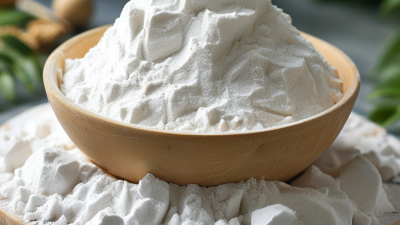
Rub a small sample between clean fingers. It should feel distinctly soapy, not gritty. In plastics, coatings, ceramics, and rubber, that softness can support easier dispersion and a cleaner surface finish. However, particle size distribution matters greatly. A coarse grade may scratch or settle, despite having the correct chemistry.
Request a certificate of analysis. Check MgO, SiO2, loss on ignition, moisture, whiteness, and trace mineral content. ISO and ASTM laboratory methods can support consistent testing, but suppliers may report different test conditions. Read the method, not only the number. The Industrial Minerals Association Europe also emphasizes mineral quality, particle size, and end-use performance in industrial talc evaluation. A useful trial uses the same dosage, mixer speed, and curing conditions as production. The formula is only a starting point. Real performance can still surprise you.
Compare Purity Using Whiteness, Fe₂O₃, CaO, and Heavy-Metal Limits
How to Choose Industrial Talc Powder for Your Business?
Purity starts with whiteness, but whiteness alone can mislead. For Micronized Talc Powder, request the test method, sample preparation, and batch result. ASTM E313 can report whiteness and yellowness indexes, while visual comparison under warehouse lighting remains unreliable. A bright powder should show consistent reflectance, not only a strong first impression. Numbers need context.
Fe₂O₃ is a practical indicator of iron-bearing impurities. Lower values usually support cleaner white coatings, plastics, ceramics, and rubber compounds. CaO also deserves attention because carbonate-rich contamination may affect formulation stability and firing behavior. Ask for both oxides on a dry basis, with detection limits included. A certificate stating “low iron” is not enough. My own purchasing mistake was accepting a rounded value without checking the laboratory method. That shortcut weakened the comparison.
Heavy-metal limits must match the application. USP General Chapter and ICH Q3D provide useful reference frameworks for pharmaceutical exposure assessment, but they are not universal industrial specifications. For general manufacturing, compare lead, arsenic, mercury, and cadmium results with your customer’s written limits and local requirements. The U.S. Geological Survey’s Mineral Commodity Summaries 2024 confirms talc’s broad use across paper, ceramics, paint, plastics, and cosmetics, so one purity profile cannot fit every market. Retain sealed samples, verify three batches, and use an independent laboratory when results appear unusually perfect. Suppliers can make errors. Buyers can too.
Match Particle Size: Select D50 Values from 5–25 μm for Processing Needs
When choosing industrial talc powder, match the D50 value to your processing conditions.
D50 means the median particle diameter, not a perfectly uniform size. A powder with a 5–10 μm D50 offers higher surface area and smoother dispersion. It may suit coatings, sealants, and fine plastic compounds. However, it can increase dust and demand stronger mixing.
For balanced processing, consider a D50 between 10 and 18 μm. This range often supports steady feeding, acceptable dispersion, and practical production speed.
Larger values, around 18–25 μm, may improve flow and reduce handling dust. They can work well in molded plastics, construction compounds, and selected ceramic formulations.
Keep the trial practical. Test the powder on your actual mixer, feeder, and drying conditions.
D50 is only a starting point.
Ask for the full particle-size distribution, moisture level, whiteness, and mineral purity. A narrow distribution can behave differently from a broad one, even with the same D50. Check surface area when viscosity or reaction speed matters.
Run a small production trial, then measure torque, feed stability, surface finish, and final strength.
One common mistake is choosing the finest powder because it sounds more advanced. That choice can raise energy use and create feeding problems. The right result may look less impressive on paper. It should perform reliably in your process.
Check Physical Data: Density Typically Ranges from 2.7–2.8 g/cm³
How to Choose Industrial Talc Powder for Your Business?
When choosing industrial talc powder, check its physical data before reviewing price or packaging. True density typically ranges from 2.7–2.8 g/cm³. This value reflects the mineral structure, not the space between loose particles. Bulk density can be much lower because particle shape, fineness, and trapped air affect powder volume. The difference matters during storage and feeding.
For Talc Powder For Paint, density influences formulation calculations and transport costs. A higher true density may increase weight per measured volume. However, it does not automatically indicate better performance. Ask for a current technical data sheet and confirm the test method. Helium pycnometry and other laboratory methods may produce different results. Small variations deserve attention.
Check the sample, too.
In a practical evaluation, compare the stated density with moisture, particle-size distribution, whiteness, and residue data. A damp powder may flow poorly and behave differently during mixing. Finer particles can occupy space differently, even when true density remains similar. I would avoid judging quality from one figure alone. That approach is convenient, but incomplete. A repeat test on a retained sample can reveal inconsistencies between batches. Simple, but useful.
Evaluate Performance Through Oil Absorption, Moisture, and Dispersion Tests
Choosing Talc Powder For Rubber requires more than checking mesh size or whiteness. In plant trials, oil absorption often predicts compound behavior better than appearance. Test each lot using ASTM D281, then record the value in grams of oil per 100 grams of talc. Higher absorption can increase plasticizer demand and change mixing torque. Lower absorption may improve processing, but it can reduce reinforcement or surface interaction. USGS Mineral Commodity Summaries 2024 reported about 7.6 million metric tons of global talc and pyrophyllite mine production in 2023. Large supply does not guarantee consistent performance.
Moisture deserves equal attention. Dry a representative sample, preferably under a controlled laboratory method, and compare the loss in mass. Even small moisture differences can create bubbles, feeding instability, or uneven dispersion in rubber compounds. Check dispersion with a microscope after mixing, or use a defined laboratory compound and mixing cycle. Look for soft agglomerates, pale streaks, and unblended particles. ASTM and ISO methods improve repeatability, yet they cannot replace production trials. I have seen a powder pass a basic sieve check and still disperse poorly. That result is easy to underestimate.
Tips: Set acceptance ranges from three to five incoming lots, not one sample. Record oil absorption, moisture, particle size, and mixing energy together. Ask suppliers for recent test data, but verify it independently. A small pilot batch may reveal problems that a certificate misses. Do not select the cheapest powder before measuring total formulation cost.
Verify Quality Under ISO 787 Methods and Review Each Batch’s COA
Choosing industrial talc powder requires more than checking whiteness or price. A 2024 U.S. Geological Survey report recorded approximately 420,000 metric tons of domestic talc mine production in 2023. That scale reflects a complex supply chain, where mineral origin and processing conditions can change performance. Ask for the mine source, particle-size distribution, moisture, whiteness, and mineralogical data. Then compare the results with your application requirements.
Verify quality through relevant ISO 787 methods, not informal supplier descriptions. ISO 787 procedures can assess volatile matter, water-soluble content, oil absorption, and pH. These values affect dispersion, surface finish, viscosity, and filler compatibility. A practical incoming inspection should test a retained sample from every lot. Check the powder under consistent lighting. Look for unexpected agglomerates, dark specks, or uneven flow. Small details matter.
Review each batch’s Certificate of Analysis, or COA, before release. The document should show the lot number, production date, test method, specification, actual result, and laboratory approval. A COA without methods is weak evidence. A result without a tolerance is difficult to interpret. Request independent verification when results approach the specification limit. This costs time. It can prevent failed coatings, unstable plastics, and expensive rework. One imperfect point remains: ISO testing improves comparability, but it cannot replace a controlled production trial. Test talc in your real formulation, at the intended loading and mixing speed.
Assess Compliance, Packaging, Supply Capacity, and Total Cost per Ton
How to Choose Industrial Talc Powder for Your Business?
Assess Compliance, Packaging, Supply Capacity, and Total Cost per Ton
When I evaluate industrial talc powder, I start with compliance documents, not color. A bright white sample proves little. Request a current certificate of analysis, safety data sheet, and origin information. Check particle size, moisture, whiteness, and mineral purity against your process requirements. Confirm that the material meets applicable regulations in your market. Independent laboratory testing can expose differences between a sample and a later shipment.
Packaging affects handling, storage, and product loss. For automated production, sealed 25-kilogram bags may reduce contamination. One-ton bulk bags can lower labor costs but require suitable lifting equipment. Inspect pallet stability and moisture protection. A torn bag creates waste quickly. Small details matter.
Supply capacity must match your real consumption. Ask for monthly output, lead time, safety stock, and backup transport plans. A supplier may promise steady availability, yet production records reveal seasonal limits. I once focused too heavily on price and ignored delayed deliveries. The cheaper powder increased downtime and overtime costs. That mistake still shapes my purchasing checks.
Calculate total cost per ton, not just the quoted powder price. Include freight, packaging, testing, storage, handling, waste, and payment terms. A low-price grade may require extra processing or produce more rejects. Compare at least three documented offers using the same technical specifications. Then run a controlled production trial before committing to a long-term volume contract.
Calcined Silver Mica Powder from China: Quality, Applications, and Supplier Selection Guide
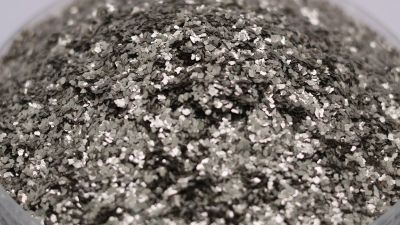
Calcined silver mica powder from China is produced through controlled thermal treatment that removes volatile impurities and improves color stability. This process creates a clean, bright silver appearance while preserving mica’s natural layered structure. Compared with ordinary natural mica powder, calcined silver mica offers stronger surface reflection, thermal resistance, electrical insulation, chemical stability, and flexibility, making it suitable for formulations that require both visual impact and dependable mineral performance.
Available in 10 mesh, 20 mesh, and 40 mesh sizes, coarse calcined silver mica is designed for applications where visible particles and decorative flakes are important. It can be used in textured coatings, architectural finishes, construction surface materials, insulation layers, functional fillers, decorative products, and other industrial formulations. The selected particle size influences surface texture, silver effect, coverage, and processing behavior, so buyers should match the mesh specification with the intended application and production method.
When selecting a Chinese supplier, customers should examine color consistency, particle-size control, cleanliness, packaging strength, inspection procedures, and export experience. A dependable factory should provide stable batch quality, clear technical specifications, protective packaging, and flexible supply options for distributors, coating manufacturers, construction-material producers, and industrial users. Sample testing and communication about moisture control, loading requirements, and customized particle specifications can further support reliable international procurement.
FAQS
True density usually ranges from 2.7–2.8 g/cm³. This reflects mineral structure, not loose-powder volume.
Bulk density includes trapped air and particle spacing. It affects storage capacity, feeding behavior, and transport calculations.
No. Higher density may increase weight per measured volume, but it does not guarantee better application results.
Compare density with moisture, particle size, whiteness, and residue data. One number is never enough.
Measure oil absorption, moisture, mixing energy, and dispersion. Record oil absorption as grams of oil per 100 grams of talc.
Moisture may cause bubbles, unstable feeding, poor dispersion, or uneven mixing. Even small differences can matter.
Examine a mixed sample under a microscope. Look for soft agglomerates, pale streaks, and unblended particles.
Use results from three to five lots. One sample can create false confidence.
It should show the lot number, production date, test methods, specifications, actual results, and laboratory approval.
No. Test the powder in the real formulation, loading, and mixing cycle. Laboratory results can still miss practical problems.
Conclusion
Choosing the right Industrial Talc Powder requires more than comparing prices. Start by confirming its basic chemistry, Mg₃Si₄O₁₀(OH)₂, and its low Mohs hardness of 1. Evaluate purity through whiteness, iron oxide (Fe₂O₃), calcium oxide (CaO), and heavy-metal limits, especially when the powder will be used in demanding industrial applications. Particle size is equally important: D50 values between 5 and 25 μm can influence processing speed, surface finish, opacity, and dispersion. Also review physical data, including the typical density range of 2.7–2.8 g/cm³.
Before purchasing, test oil absorption, moisture content, and dispersion performance under actual processing conditions. Request quality documentation based on ISO 787 methods and carefully review the COA for every batch. Finally, assess regulatory compliance, packaging protection, supply capacity, delivery reliability, and total cost per ton. A balanced evaluation of technical performance, consistency, logistics, and long-term value will help your business select a dependable talc solution.