
Leave Your Message

China Tourmaline Lumps Suppliers - High-Quality Mineral Stones from Factory for Water Treatment & Industrial Use

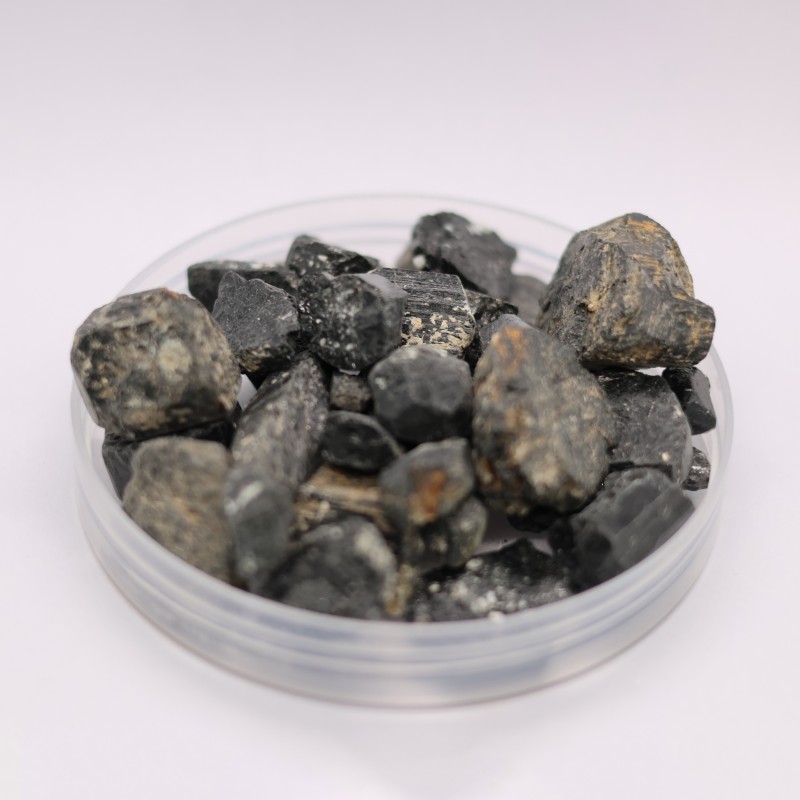
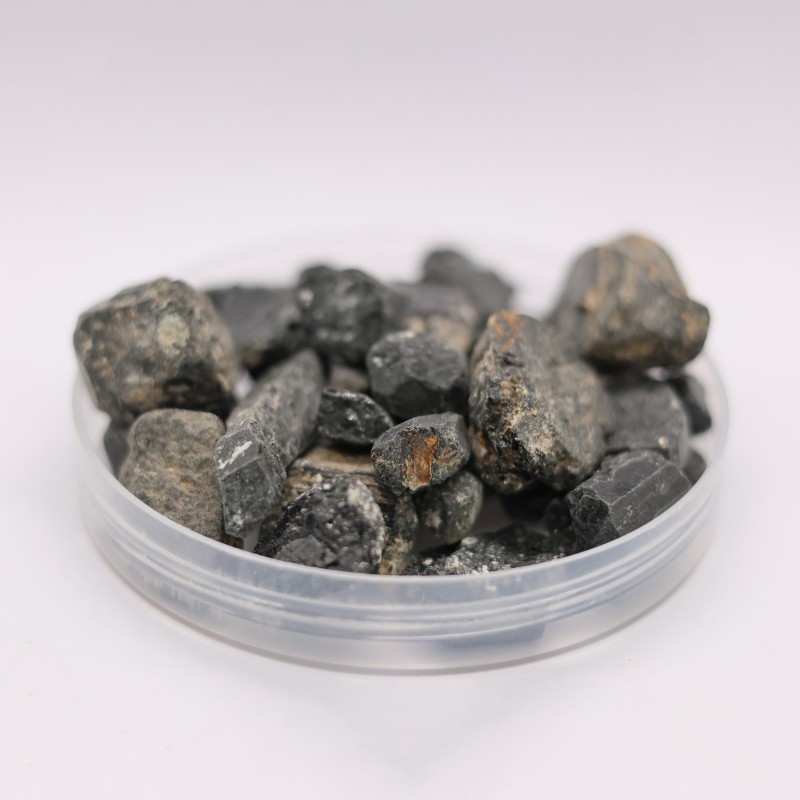
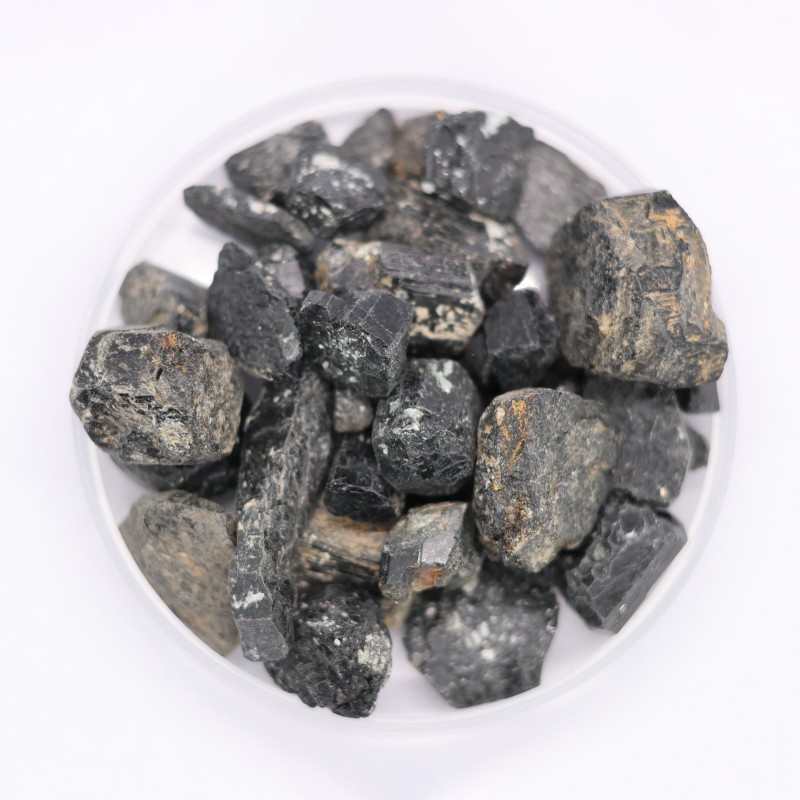
Discover premium tourmaline lumps sourced directly from our factory in China. These natural mineral pieces are carefully selected from high-quality tourmaline ore and processed into optimal sizes for various industrial, functional, decorative, and material-processing applications. Tourmaline, a complex crystalline borosilicate mineral group, may contain essential elements such as silicon, aluminum, boron, iron, magnesium, sodium, potassium, calcium, and lithium, depending on the specific mineral type and geological origin.

Unlike tourmaline powder, our tourmaline lumps maintain a larger particle structure, making them easier to handle, store, wash, pack, and utilize in filtration or decorative systems. They can be conveniently crushed into smaller granules, ground into powder, or used directly as mineral stones in filter bags, aquaculture systems, garden decorations, wellness product accessories, and mineral media packages. For those manufacturing tourmaline powder or ceramic balls, our selected tourmaline lumps serve as an essential raw material sourced directly from reliable suppliers.

WANCHENG MINERAL, a leading supplier in China, offers a diverse range of tourmaline lumps in various colors, sizes, and grades tailored to meet customer specifications. Our products include black tourmaline lumps, dark gray tourmaline stones, mixed-color tourmaline pieces, and customized graded mineral lumps. Available sizes range from 1-3 cm, 3-5 cm, 5-10 cm, with options for custom crushed pieces based on your application needs. Grades are determined by purity, color, particle size, appearance, mineral content, and intended use.

For international buyers, consistent raw material quality is paramount. Variations in mineral sources, color, impurity levels, moisture content, and particle sizes can significantly impact downstream processing and market positioning. At WANCHENG MINERAL, we are committed to providing selected raw materials, controlled grading, clean packaging, export documentation support, and a stable supply for global distributors, water treatment media producers, ceramic ball manufacturers, powder processors, and functional material producers.

    This is a paragraph

    This is a paragraph

    This is a paragraph

    Chemical Component Typical Content Description
    SiO2 30% - 45% Main silicate component
    Al2O3 25% - 38% Main alumina component
    B2O3 7% - 11% Typical tourmaline component
    Fe2O3 3% - 15% Varies by color and type
    MgO 1% - 10% Varies by mineral source
    Na2O + K2O 1% - 5% Alkali components
    CaO 0.5% - 4% Minor component
    Li2O Trace to variable Depends on tourmaline type
    TiO2 Trace Controlled impurity
    Frequently Asked Questions
    What are the main chemical components of tourmaline?
    The primary constituents of tourmaline are Silicon Dioxide (SiO2) at 30% to 45% and Aluminum Oxide (Al2O3) at 25% to 38%, which together form its core complex silicate framework.
    Why does the iron content (Fe2O3) vary significantly?
    Iron oxide (Fe2O3) ranges from 3% to 15% because it is the primary chromophore responsible for dark colors, such as in black tourmaline (schorl) or dark brown varieties.
    What is the significance of Boron Oxide (B2O3) in the structure?
    Boron Oxide (B2O3) is a defining characteristic of tourmaline, accounting for 7% to 11% of the composition and playing a crucial role in its boron silicate crystal lattice structure.
    How do alkali components (Na2O + K2O) function in the mineral?
    Sodium and potassium oxides (1% - 5%) occupy specific structural sites within the crystal grid, balancing the overall electrical charge of the silicate framework.
    Why are Lithium (Li2O) and Titanium (TiO2) present only in trace amounts?
    Li2O and TiO2 act primarily as trace elements or controlled impurities that define specific sub-species (such as elbaite) without altering the base silicate matrix.
    Does the chemical variation affect the commercial application?
    Yes, variations in elements like iron, magnesium, and calcium determine the mineral's color, dielectric properties, and suitability for industrial, acoustic, or gemstone uses.

    This is a paragraph

    This is a paragraph

    This is a paragraph

    This is a paragraph

    This is a paragraph

    This is a paragraph

    This is a paragraph

    This is a paragraph

    This is a paragraph

    This is a paragraph

    This is a paragraph

    This is a paragraph

    This is a paragraph

    This is a paragraph

    This is a paragraph

    Application Image Grid Placeholder

    FAQ

    • This is a paragraph

    • This is a paragraph

    • This is a paragraph

    • This is a paragraph

    • This is a paragraph

    • This is a paragraph

    • This is a paragraph

    • This is a paragraph

      This is a paragraph

    This is a paragraph

    This is a paragraph

    This is a paragraph
    This is a paragraph