Leave Your Message

Tourmaline Lumps from China - Quality Suppliers and Factory for Industrial Applications and Water Treatment

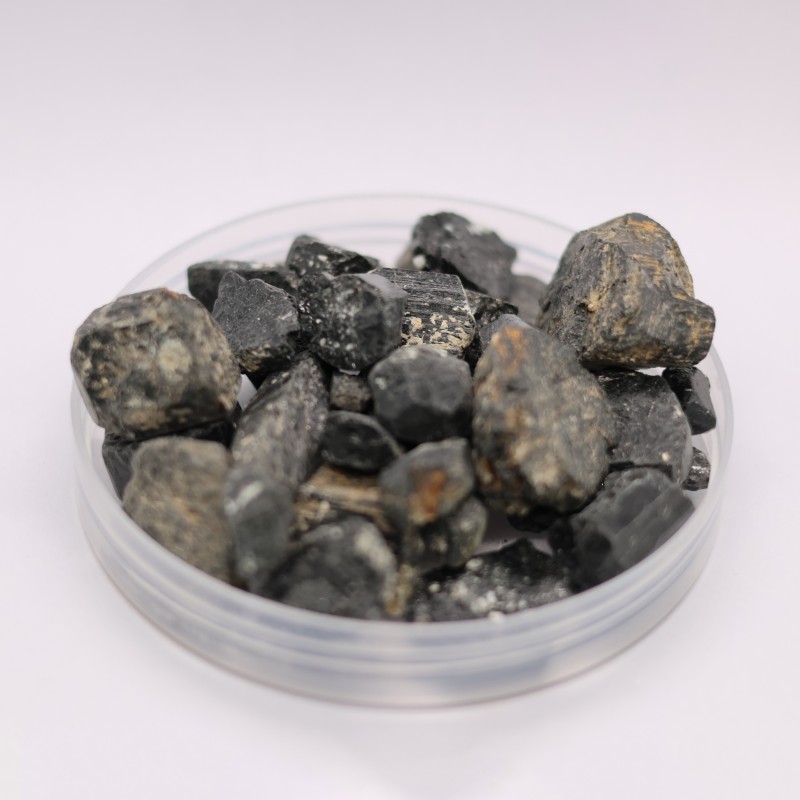
WANCHENG MINERAL is a leading supplier of high-quality tourmaline lumps sourced from premium tourmaline ore in China. Our natural mineral pieces are meticulously selected and processed into usable sizes, making them ideal for various industrial, decorative, and functional applications. Tourmaline is a complex borosilicate mineral containing elements such as silicon, aluminum, boron, iron, magnesium, sodium, potassium, calcium, and lithium, depending on the specific mineral type and geological origin. Due to its unique mineral structure, natural tourmaline is extensively utilized in water treatment media, ceramic production, mineral powder processing, coatings, textiles, far infrared applications, negative ion products, and decorative stones.

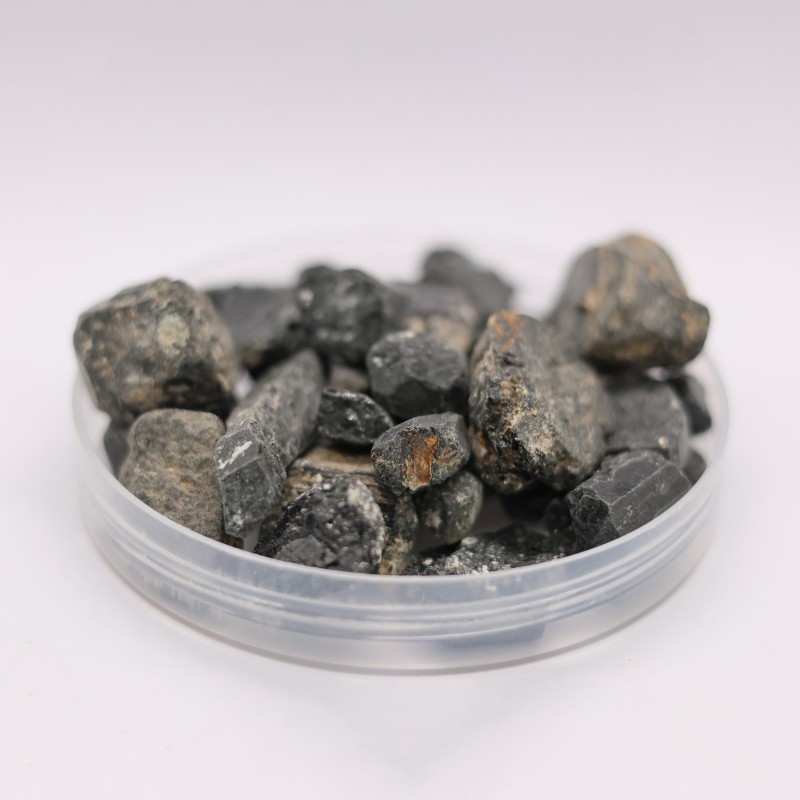
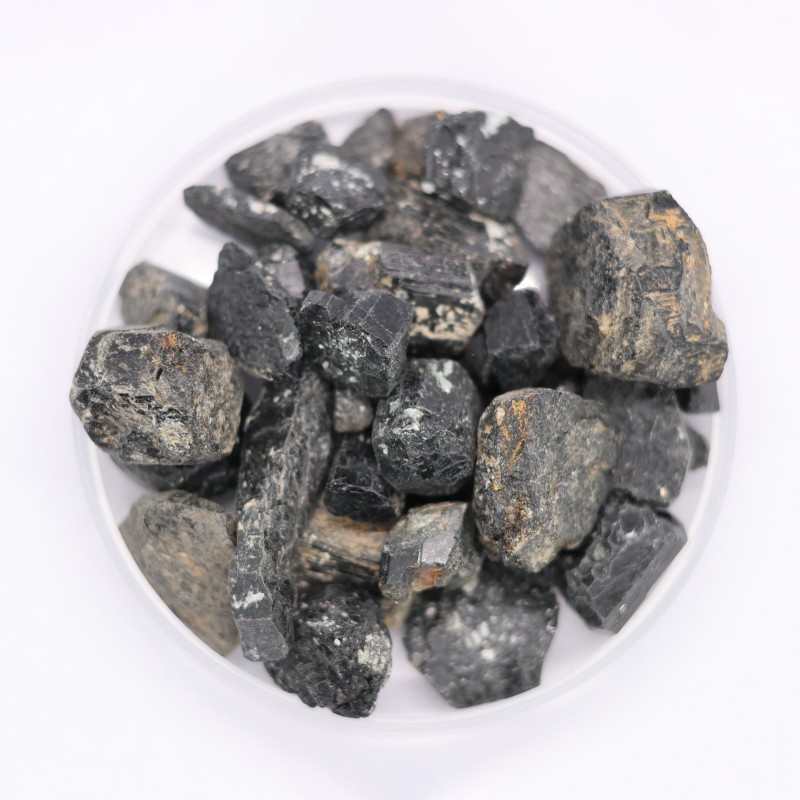
Unlike tourmaline powder, our tourmaline lumps feature a larger particle size that facilitates easier handling, storage, washing, packing, and usage in filtration or decorative systems. These lumps can be easily crushed into smaller granules, ground into powder, or utilized directly as mineral stones in filter bags, aquaculture settings, garden décor, wellness accessories, and mineral media packages. For businesses that manufacture tourmaline powder or ceramic balls, our selected tourmaline lumps serve as essential upstream raw materials, ensuring optimal processing and product quality.

As a reputable factory in China, WANCHENG MINERAL offers tourmaline lumps in various colors, sizes, and grades tailored to customer specifications. Our common products include black tourmaline lumps, dark gray tourmaline stones, mixed-color tourmaline pieces, and customized graded mineral lumps. Sizes available include 1-3 cm, 3-5 cm, 5-10 cm, or any customized crushed pieces according to your application needs. When selecting the final grade, consider factors such as purity, color, particle size, appearance, mineral content, and intended use.

For international buyers, maintaining consistent raw material quality is crucial. Variations in mineral source, color, impurity levels, moisture content, and particle size can significantly influence downstream processing and market positioning. WANCHENG MINERAL prioritizes selected raw materials, controlled grading, clean packaging, export documentation support, and stable supply chains for global distributors, water treatment media producers, ceramic factories, powder processors, and functional material manufacturers. Partner with us for reliable tourmaline resources that meet your needs!

    This is a paragraph

    This is a paragraph

    This is a paragraph

    Chemical Component Typical Content Description
    SiO2 30% - 45% Main silicate component
    Al2O3 25% - 38% Main alumina component
    B2O3 7% - 11% Typical tourmaline component
    Fe2O3 3% - 15% Varies by color and type
    MgO 1% - 10% Varies by mineral source
    Na2O + K2O 1% - 5% Alkali components
    CaO 0.5% - 4% Minor component
    Li2O Trace to variable Depends on tourmaline type
    TiO2 Trace Controlled impurity
    ? Frequently Asked Questions

    Q: What are the major chemical components of this mineral?

    Silicon dioxide (SiO₂) at 30%–45% and aluminum oxide (Al₂O₃) at 25%–38% constitute the primary silicate and alumina matrix of the mineral structure.

    Q: Why is Boron Oxide (B₂O₃) characteristic of this composition?

    B₂O₃ is present in concentrations of 7% to 11%, representing a defining and essential signature component of tourmaline-group minerals.

    Q: What determines the variation in Iron Oxide (Fe₂O₃) levels?

    Fe₂O₃ content ranges between 3% and 15%, primarily fluctuating based on the specific variety, color, and crystalline type of the specimen.

    Q: How do alkali components (Na₂O + K₂O) affect the mineral?

    Combined alkali oxides typically account for 1% to 5% of the total mass, maintaining charge balance and chemical stability across different mineral batches.

    Q: Why are Lithium Oxide (Li₂O) and Titanium Dioxide (TiO₂) tracked as trace elements?

    Li₂O varies depending on the specific mineral type (such as elbaite), while TiO₂ is monitored as a controlled trace impurity to maintain quality consistency.

    This is a paragraph

    This is a paragraph

    This is a paragraph

    This is a paragraph

    This is a paragraph

    This is a paragraph

    This is a paragraph

    This is a paragraph

    This is a paragraph

    This is a paragraph

    This is a paragraph

    This is a paragraph

    This is a paragraph

    This is a paragraph

    This is a paragraph

    Application Image Grid Placeholder

    FAQ

    • This is a paragraph

    • This is a paragraph

    • This is a paragraph

    • This is a paragraph

    • This is a paragraph

    • This is a paragraph

    • This is a paragraph

    • This is a paragraph

      This is a paragraph

    This is a paragraph

    This is a paragraph

    This is a paragraph
    This is a paragraph