Grinding Glass Beads
|
Chemical Component |
Typical Content |
Descriptio |
| SiO2 | 70% - 73% | Main glass network component |
| Na2O | 12% - 15% | Fluxing component |
| CaO | 7% - 10% | Improves glass stability |
| MgO | 2% - 4% | Improves durability |
| Al2O3 | 0.5% - 2.0% | Improves chemical resistance |
| K2O | 0.5% - 1.5% | Minor alkali component |
| Fe2O3 | <= 0.5% | Controlled impurity |
|
Item |
Typical Value |
| Product Name | Grinding Glass Beads |
| Material | Soda-lime glass |
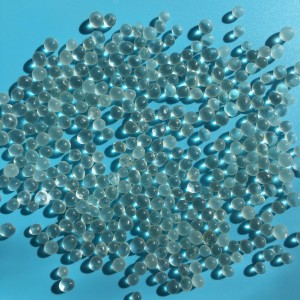
| Appearance | Transparent or white spherical beads |
| Common Sizes | 0.4-0.6mm, 0.6-0.8mm, 0.8-1.0mm, 1.0-1.5mm, 1.5-2.0mm, 2.0-3.0mm |
| Hardness | Approx. 6-7 Mohs |
| Specific Gravity | Approx. 2.4-2.6 g/cm3 |
| Bulk Density | Approx. 1.4-1.6 g/cm3 |
| Roundness | Good roundness, grade-dependent |
| Moisture | Low moisture |
| Application Equipment | Bead mill, sand mill, ball mill, basket mill |
| Packaging | 25kg bags, jumbo bags, OEM |
Note: The chemical composition and technical parameters above are typical reference values for soda-lime grinding glass beads. Final specifications can be adjusted according to customer requirements, milling equipment, material formulation, and target grinding performance.
1. Good Roundness and Smooth Surface
The spherical shape of glass beads supports uniform grinding and stable flow inside the milling chamber. A smooth bead surface helps reduce equipment wear compared with sharper or angular media.
2. Stable Particle Size Distribution
Controlled screening ensures more consistent bead size. Stable particle size helps improve milling repeatability and reduces unexpected equipment blockage.
3. Cost-Effective Grinding Media
For many general grinding and dispersion applications, glass beads offer a practical balance between performance and cost. They are suitable for customers who need economical media for regular production.
4. Low Contamination Risk
Soda-lime glass beads are non-metallic grinding media and can help reduce metal contamination in many applications.
5. Wide Compatibility
Grinding glass beads can be used in paints, inks, pigments, chemicals, ceramics, minerals, and laboratory equipment.
6. Customizable Sizes and Packaging
WANCHENG MINERAL can provide different bead sizes, packaging forms, and OEM solutions according to customer requirements.
Proper packaging helps maintain the cleanliness, dryness, and free-flowing condition of grinding glass beads. WANCHENG MINERAL provides export-grade packaging for international customers, suitable for container shipment, warehouse storage, and distributor handling.
Common packaging options include 25kg PP woven bags, 25kg kraft paper bags, 1MT jumbo bags, palletized packaging, and OEM packaging. Customers can choose packaging based on order volume, storage method, equipment feeding method, and end-market requirements.
The product should be stored in a dry and clean environment. Avoid moisture, oil contamination, broken bags, and mixing with other abrasive media. Before loading into bead mills, customers should check whether the selected bead size is compatible with the equipment screen or separator.
WANCHENG MINERAL follows a controlled production and quality inspection process to ensure stable grinding glass beads for industrial use.
1. Raw Material Selection
Stable soda-lime glass raw materials are selected to ensure consistent composition and reliable bead performance.
2. Melting and Bead Forming
The raw material is melted under high temperature and processed into spherical glass beads.
3. Cooling and Stabilization
The formed beads are cooled under controlled conditions to maintain particle strength and shape.
4. Screening and Classification
Glass beads are screened into different particle size ranges according to customer applications.
5. Roundness and Appearance Control
Irregular particles, broken beads, and impurities are reduced through inspection and classification.
6. Quality Inspection
Each batch is inspected for particle size, appearance, cleanliness, and packaging condition.
7. Packaging and Shipment
Qualified products are packed according to export standards or customer requirements.
For best grinding results, customers should not choose bead size only by price. The bead size should match the mill separator, material viscosity, initial particle size, and required final fineness. If beads are too small for a coarse material, grinding efficiency may be low and processing time may increase. If beads are too large for fine dispersion, the final particle size may not meet the required standard. A practical selection test is recommended before bulk production. WANCHENG MINERAL can support customers with sample grades for comparison and help identify a suitable balance between grinding efficiency, media consumption, product quality, and production cost.
-
Q1: What are grinding glass beads used for?
Grinding glass beads are used for grinding, dispersion, mixing, and particle size reduction in paints, coatings, inks, pigments, chemicals, ceramics, minerals, and laboratory milling. -
Q2: How should I choose the correct bead size?
-
Q3: Are glass beads reusable?
-
Q4: What is the difference between grinding glass beads and ceramic beads?
-
Q5: Can WANCHENG MINERAL provide customized sizes?
-
Q6: Can samples be provided before bulk order?